Feed—or start—your ski streak.
What does it take to ski year-round? A love for snow, walking legs, and a little bit of grit. Instead of thinking of it as skiing, it might be helpful to think of these more like summer adventures. These days usually look like a lot of walking, a little bit of power hiking, a smidge of skiing, and a whole lot of walking again. But, to keep those muscles in shape and explore these mountains we know so well in the winter? Feels pretty priceless. Today we dive into summer skiing, especially here in the Rockies with tips from our favorite athletes who are getting after it year-round, to give you hints and tricks on how we spend our summer skiing.
Where is this snow anyway?
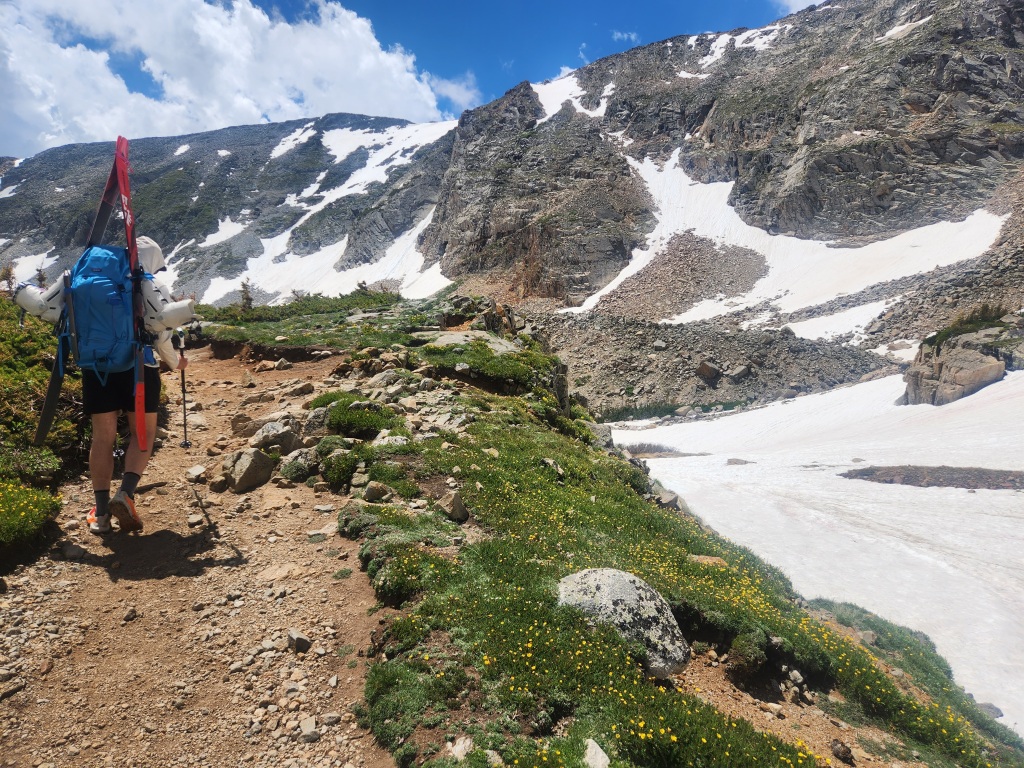
In Colorado, we’re lucky to have year-round snow fields thanks to our high elevation. Most mountain ranges in the West will have some snow up high throughout the summer, though the quality and quantity may vary.
That said, it’s not always easy to get to them. Hike in with skis on your back and heading up in trail runners is often the best way. Click your boots into their bindings as you hike, then find a nice rock to perch on to transition your shoes.
Owen Leeper (@o_leeps): “If you are looking for summer skiing without too much hiking, look for roads that access high mountain passes like Independence Pass near Aspen, or jeep roads. When you can drive to 12,000 feet, you will have a much easier time finding snow.”
Timing is everything
Once we’ve fully transitioned to a summer snowpack that’s consolidated, wet slides and other avalanche concerns tend to fix themselves. Always be plugged into your local conditions and avalanche reporting to find out when it’s safe to go. When in doubt, go early!
Veronica Paulsen (@veronicabelle): “Get an early start, like really early. Besides getting the snow before it turns to sticky mush, you’ll also see the best sunrise of your life when you summit.”
If you are more of the late-to-bed, late-to-rise crew, fsummer is more forgiving with safer avalanche conditions. On the flip side, afternoon thunderstorms become a whole new hazard. Nothing says conductor like two long sticks pointed up in the air. Thunderstorms move in quick in the high country, so plan to get in and out before noon or so, just to give yourself enough time.
Doug Evans (@dougtheskier): “Keep an eye on the weather. Lightning doesn’t discriminate. And think about time. Things always take twice as long to hike to in the summer.”

The gear
If you think skiing in the winter is hard on your gear, summer skiing has got a whole new side of it. With dirt on the snow and extra rocks exposed, summer skiing isn’t exactly easy on your gear. Be ready to wash off those skis after each adventure to make sure dirt and grime don’t wear away at the edges or bases.
Doug Evans (@dougtheskier): “Check your gear. Summer skiing does take a toll on gear. Bindings break. Skis break. Snow is abrasive and tends to tear your bases up.”
As for the gear, it depends on your objective. A low-angle snow field won’t require much more than a party shirt and some warm weather wax to make sure things keep running smooth.
If you have bigger plans, though, with a steeper objective, consider bringing crampons or an ice axe. Not needed for most summer objectives, but a steep line that you have to boot pack up might feel more comfortable with some pokey bits.
Veronica Paulsen (@veronicabelle): “If you’re not sure, just pack the ice axe and crampons. You can thank me later.”
Owen Leeper (@o_leeps): “No matter when you go, be sure to put a good warm wax on so you can actually make some fun turns.”
Keep it conservative
Summer skiing isn’t like normal winter skiing. While that may sound obvious, it can sometimes feel like a different sport.
During the summer, the snow surface goes through a unique melt cycle, which creates “sun cups”. Think of these as sharp moguls, shaped like waves in the ocean. I call them “summer moguls”. They’re not pristine corn you can rip through. They tend to require a bit more power and finesse to navigate than your standard blue run.
Summer also creates unpredictable snow consistencies. It typically doesn’t freeze overnight during the summer, but sun cups can create hard ridges that feel like trying to ski bumps at 9 am in April. Later in the afternoon can be soft, but too late can be mushy and unpredictable.
Doug Evans (@dougtheskier): “Tone it back during those later months, August and September, when you haven’t skied for a few weeks. You haven’t been doing laps at the ski area. That first turn—take it slow. Most wrecks I’ve seen happen on the first turn. You’re stoked and you go in hot and the turn doesn’t feel like the snow you skied three or four weeks ago. Leave ego at home at stay humble out there.”