Still the boss.
When I started at the shop four years ago, I was told the Black Pearl held the crown as one of the most popular women’s skis. It was something I could safely recommend to female skiers looking for a quick, fun, and supportive ski that wouldn’t beat them up to much. As someone who likes heavier skis, I wasn’t sure what that meant for me. But when I took a few laps on the Black Pearl, it all started to click. A few years went by without much change, and I felt something might be brewing in Blizzard’s R&D department this seaon. Blizzard delivered—a whole new Black Pearl series. How is it different than the old model? How does it ski? Will Black Pearl fans keep loving this ski? We dive into all of it in our Blizzard Black Pearl 88 review.

Blizzard Black Pearl 88 Review: Field Notes
Let’s dive into what changed.
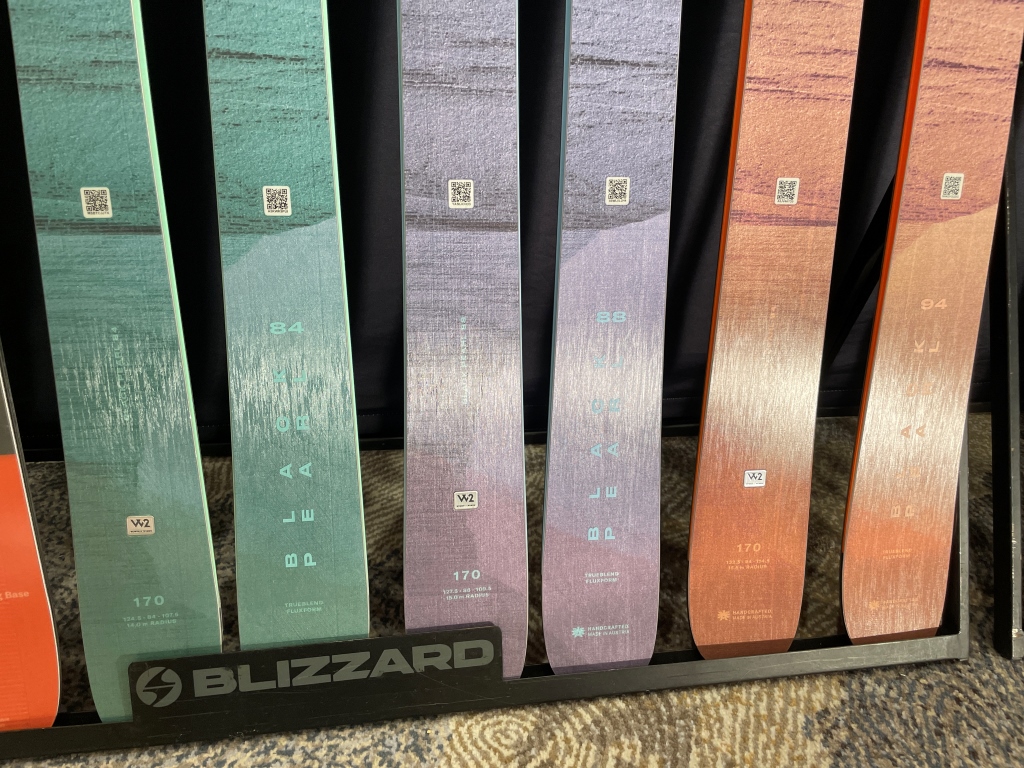
The Black Pearl starts from scratch with a new mold, a new True Blend wood core, and new metal construction. The shape of the metal is pretty intriguing. It takes inspiration from the Flux Form metal shape from the Rustler/Sheeva series and adds a twist.

Full strips of titanal run from tip to tail along each edge, but in addition to the layer with those strips, a different layer of metal below fills the space between the two strips. That adds up to a full sheet, just on different layers that allow them to shear independently. On snow, that makes the ski feel less torsionally rigid but still powerful. Previous versions of the Black Pearl didn’t have metal in them.

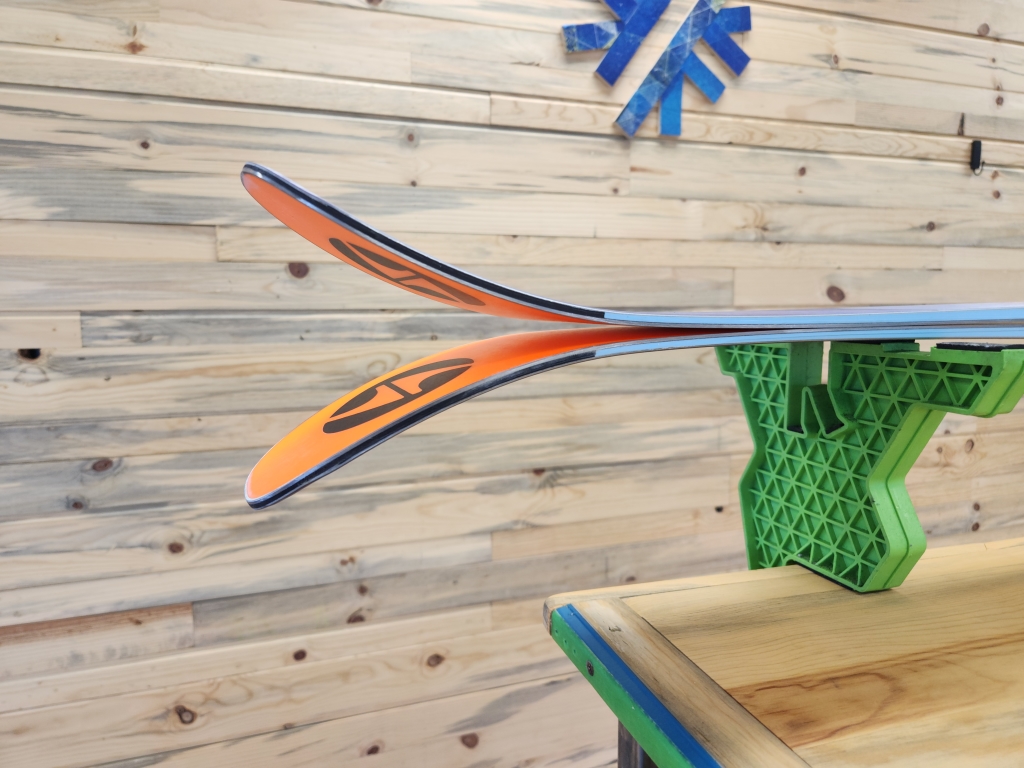
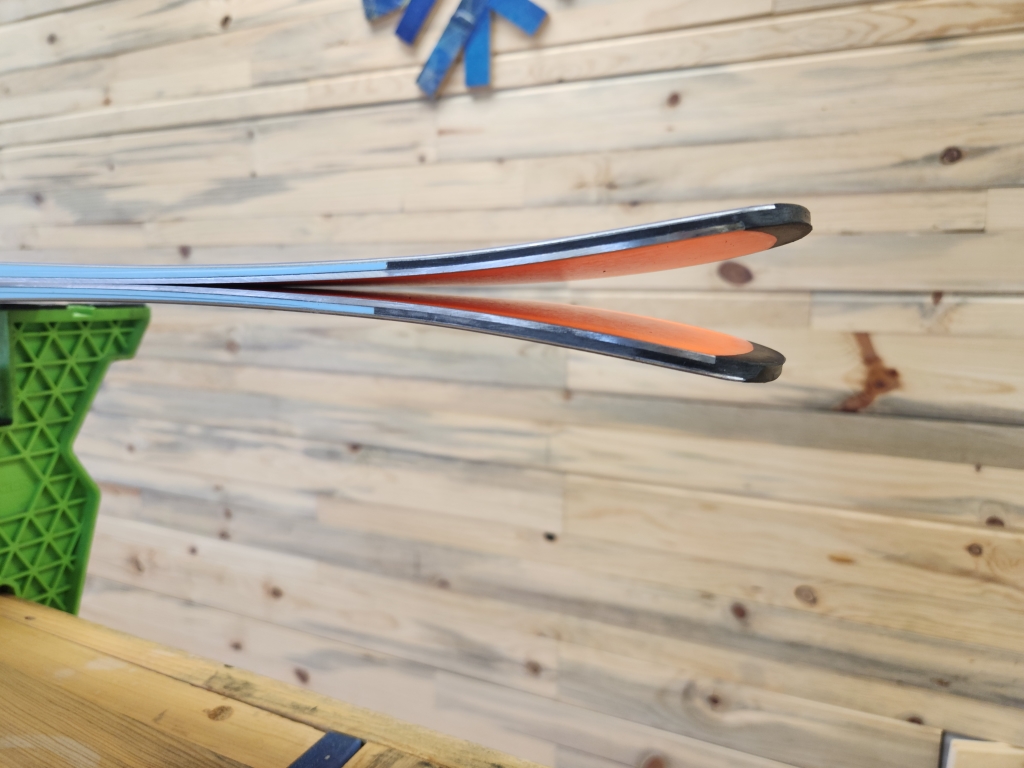
The shape is treated to a deeper rocker in the tip and tail, with healthy camber underfoot. That combo makes for increased maneuverability and smooth turn initiation. You also get an updated True Blend wood core to go along with the updated molds and construction. As a reminder, True Blend uses stiffer woods underfoot with softer woods at the tip and tails for a smooth flex throughout the ski.
I got to ski the Black Pearl 88 at Vail during the early season, but thanks to Vail’s high elevation, we had a smattering of trails and even some bumps. I skied the 170cm (at 130lbs and 5’8″), which is a length I’m happy riding for this ski. In theory, I could bump up to 176cm (and probably would for the Black Pearl 94), but as a frontside ski, the 170cm is nimble in bumps while feeling plenty stable.
Groomers
The Black Pearl 88 was always a ski I could get down with to carve on for a day, and this version is no different. I think the new model keeps so much of that Black Pearl DNA that women shredders everywhere love while leveling up the ceiling of skill and aggression you can ride it with.
The new shape and construction help you lean into a turn and ski it harder. It supported longer turn shapes and pretty high speeds, without requiring it. I felt like I could increase my edge angle, take a more forward stance, and trust the ski to support that whole turn consistently.
For me, the new Black Pearl feels more powerful underfoot. I’m not sure if that’s the new Trueblend core or the addition of metal, but the ski felt more stout and supportive on edge right underfoot. That adds loads of confidence in your edges and support the ski can provide, especially in less-than-ideal snow conditions.
I most enjoyed skiing the Black Pearl through groomed trails in the afternoon, where the snow is less pristine and more chopped up. I wouldn’t say it’s as damp and planted as other metal models like the Volkl Kenja or the Nordica Santa Ana 87. But, it was never unpredictable, nor did I feel “unstable”. You can fully feel those edges lock in and feel you can hold your turn. At the same time, it has more energy and pop than those skis. You can ski it more cautiously and at slower speeds while retaining the liveliness and fun of it. For that reason, it makes it a great option to progress with.
Bumps and Trees
The Black Pearl 88 is way more fun than it should be in bumps. It reacts quickly and helps you change lines on a dime. Quickness and confidence go hand in hand—if you feel like you can get this ski maneuver when you need it to, you can whip tighter turns and take more challenging lines. And, despite adding metal, the Black Pearl also feels like less work than something more charge-y (and maybe a little slower edge-to-edge).
The Black Pearl has always been known for being nimble, but the subtle tweaks to the construction this year help dampen it. So when bumps were scraped off, the ski felt more consistent and predictable. I loved how the ski also never punished you for winding up in the backseat and was forgiving at slower speeds. Skis with lots of torsionally rigid metal can feel plank-y or unforgiving in that kind of terrain. But the Black Pearl’s metal shape allows for a little flex at slower speeds.
To me, the more traditional mount point and shape mean the Black Pearl leans on the more directional side of things, or more “carve-y”. If you spend more time on groomed terrain, firmer snow conditions, or know you prefer a more traditional ski shape, the Black Pearl 88 will do you right. It feels less easy to pivot or slash sideways compared to an Armada ARW or Line Pandora 92. So if you like the idea of slashing the ski sideways to shed speed, or like the idea of skiing switch every once in awhile, there are more playful options out there.

Mixed Snow and Powder
Now that I’ve spent some more time in this ski after testing in Vail last year, I can update you with some deeper snow takes. Here I’m referring to some proper deeper snow, say over 6 inches.
It’s not my first choice for navigating deep, choppy snow. The lightness and energy that shines so much on frontside terrain can make pushing through choppy snow more difficult. It doesn’t feel remarkably planted at speed, and 88mm is just not my preferred width for skiing in these conditions a lot.
That said, if you ski a bit more dynamically and take snappier, short turns to find the best snow, the Black Pearl will do well for you. It can quickly navigate out of a bad spot, it just may not feel completely “tank like”. But that’s sort of the point—this ski is lively and quick to respond on firm conditions and does quite well with shallow frontside chop. I just wouldn’t take it into the back bowls. If you’re skiing that kind of terrain quite often, I’d be looking to the wider Black Pearl 94, whose wider surface area does quite a bit better at navigating these conditions.
Again, I’ll emphasize, that this is a frontside-focused ski. I wouldn’t necessarily expect it to perform outstanding in these conditions. If you mostly stick to groomed terrain and frontside bumps, this ski will perform well for you. And you can not be afraid to take it down the occasional early-season rope drop. It’s just not going to be the best pick as your soft snow-focused ski.
Downside?
Per usual, a ski’s strength can be simultaneously its weakness. The lively energy of this ski doesn’t translate to a supremely damp ride. For folks who like ultra high-performance suspension at the cost of being harder to ski, this ski probably won’t give you the “glued” to the snow feeling you are searching for. I’d point you in the direction of the Volkl Secret / Kenja series, Salomon Stance 88, and Nordica Santa Ana (read my full review of the new Nordica Santa Ana 92 here). But again, the Black Pearl has a more dynamic ride than all those skis.
To me, this new model is also going to be a touch trickier for beginner to early intermediate types in the bumps. The increased stiffness supports more aggressive skiing. And while I think on open trails an early intermediate can get on top of easily, it’s a notch more difficult to flex into in tight terrain where you may be skiing more cautiously. If you’re not interested in going in bumps as an early intermediate (a wise choice), this ski will still work well for you.
Bottom Line
When I would recommend the Black Pearl to folks before, the words to describe it were confidence-inspiring and quick. It made for a great first ski for intermediates, all the way up to experts who valued a lively quick ride. Blizzard managed to retain all of that and improve it. It’s probably best in class now for that reason with new tech and a refined shape.
Its newfound precision on firm snow and bumps makes it a touch more difficult to ski. But if you think of the range of skiers who will enjoy this, Blizzard raised the ceiling much more than it raised the foundation. More skiers than ever will have a good time on the Black Pearl 88, and they’ll probably be better skiers for it. You rarely find a ski that helps you grow, with an accessible entry point and forgiving riding as you challenge yourself.