The Head Kore gets a new core.
Apologies for the bad pun, I couldn’t help myself. When a ski like the Head Kore gets an entirely new look and feel, it’s pun-worthy. A few seasons back, lightweight freeride was all the rage. Something light enough to throw a hybrid binding on, combined with enough strength to push through mixed snow. The Head Kore ticked all those boxes and more, and quickly became one of the hottest skis on our shelves. After a few years without any updates, Head turned their attention to how they could improve these skis without losing their core (another intended pun): performance that doesn’t require heavy metal. Did they accomplish it? Just how good are these updates? We dive into all the details in our Head Kore 100 Ti review.
Head Kore 100 Ti Review: Field Notes
On paper, there are some significant changes here. There’s an entirely new shape, with new rocker and sidecut lines. You’ll find a deeper rocker in both the tip and tail, along with new, deeper taper in the tips and tails. All of that should equal more maneuverability. On the tails, the taper isn’t too dramatic or deep. Especially compared to some more playful and twin-tipped shapes you’ll see on ski walls. That should balance the rocker and tip shaping, giving you a bit more contact on the snow when over on edge.
You might have noticed there’s something new in that model name. Titanal! Head throws not one, but two layers of titanal in the new Kores for additional dampening and to throw down some extra rigidity. They’ve also swapped the wood core to be a blend of Karuba and Beech. Karuba is a light wood that has good pop, but shaves weight. Beech is a new addition and is known for offering a stiffer hand flex. As always, a good layer of Graphene is used to help keep the skis riding smooth and quiet, without adding hardly any weight.
These skis are unisex and offered in a full-size run, but if you’re a fan of women’s specific models (or a different graphic), there’s also a new women’s collection. They offer the same construction with a different wood layup — poplar with recycled water bottle stringers. The high-tension water bottle fibers act as a sustainable alternative to carbon and other dampening agents by utilizing recycled materials.

Here’s some tech-y details:
Sizes: 156, 163, 170, 177, 184, 191
Weight: 1,922 grams/ski (177cm)
Radius: 17.2
Dimensions: 133-100-122
I’m 5’8″ and 135lbs and skied the 170cm, which is right where I like to be for all-mountain skis. I could bump up to 177cm, but never felt like I found a speed limit on these, and the agility in bumps validated my choice.
Groomers
For groomer performance, you tend to want a few things. Low chatter in the tip for stability at high speeds, solid contact length for good edge hold, and a fairly damp construction to quiet harsh or firm snow. To me, the new Head Kore knocks all those out of the park. Two of three are dramatic improvements from the previous generation.
Despite opening up the rocker profile and loosening the taper, the skis still feel plenty supportive on edge. You don’t feel the ski wash out on you, nor does it want to lend itself to skidding. You can make some real carves. Head kept the taper on the tail more subtle, allowing the ski to finish turns strongly. In that sense, that puts it solidly in the “more traditional, directional” category compared to more playful and loose. I also found that the ski didn’t have as much chatter.
The new Kore doesn’t require a lot of input to engage the ski properly; it’s pretty accommodating of a more relaxed stance. But if you want to press the gas, I found it did so happily. And, this will be a theme of the review, but the front of the ski feels notably lighter than some other skis loaded up with metal. Head delivered a big bang for the buck on how user-friendly the ski is, while maintaining a high ceiling of performance.
With a couple of narrower options in the lineup, if firm snow is something you’re dealing with more often, it’d be worth checking out those more narrow Head Kores, like the 88 and 94. Those skis will offer more agility and snap. Elongated contact lines will also give you more edge purchase.

Bumps and Trees
A big change to this new model is the flex pattern. The old Kore felt pretty uniformly stiff throughout the whole ski. The tip was just as stiff as underfoot and in the tail. This helped stabilize the ski with how light it was, but made it a little heads-up to ski in bumps. There wasn’t much compliance when you hit a piece of crud or a bump in a funny way. It sort of rocked you a bit. The new model delivers much more suspension, without necessarily making the ski “soft”.
The combination of this new flex pattern and the shaping makes this ski an absolute weapon in the bumps. The agility is out of this world. It links different turn shapes up smoothly, and rocks from edge to edge better than before. The ski feels more narrow than it is, which is great in our often firm and ever-growing bumps between storm cycles. But, you do have the extra width of a 100mm ski to give you the surface area for stability when snow is chopped up, or spring snow weirdness in the trees. I thought this combo puts the 100mm in a real sweet spot for deeper snow packs as an all-mountain ski.
After my umpteenth bump lap of the day, I came away with the thought that this is just an intuitive, smooth, cool ski. It’s so much more accessible in challenging, tight terrain than the old one. Frankly, more than so many other heavy metal options. But it still delivers that precision I really loved about the old one. It holds a line and stays predictable, without demanding a high level of performance.

Powder and Mixed Snow
With a 100mm ski, you want it to navigate soft snow. It’s on the wide side of all-mountain, so whether it’s your one ski quiver or a ski you’ll do some exploring around the mountain with, you should be able to enjoy those pow stashes and storm cycles. I’ve become a bit of a wide-ski-hooligan in my old age, and have come to prefer something closer to 110 for mixed snow skiing. That said, I was impressed with how the Kore held up in soft snow. For my preferences and the snow I’m often trying to ski, I’m excited to hop on the 104 / 106 Ti, since I think these updates are going to make a big difference on the more “freeride” oriented models.
I skied this on a spring-y day at Loveland, but with plenty of fresh, colder snow up high. We were transitioning between soft and cold fresh inches to some more grabby spring weirdness. And again, the Kore was smooth and consistent. I liked the size (length and width) for stability in these mixed conditions. The tip shape was also — dare I say — a little surfy? Once in open terrain and deeper snow I liked the way the tip floated and connected turns together. You still feel that directional shape though, and I still think this ski likes to stay to the fall line, rather than pivot or smear.
In crud, I found the ski to track pretty well through funky snow. The perks of a new flex pattern up front prevent the Kore from slicing through mixed snow like a chef’s knife (like say a Mantra 102), but the ski is obviously much easier to engage.
Downside
Skis that hit the sweet spot undeniably miss out on the unique feel of more niche models. This doesn’t have the heavy, crazy glued to the snow feel that a Nordica Enforcer and a Kastle Paragon have. There’s a significantly lower swingweight on the Kore, and while that makes for much easier skiing and fresher legs, you don’t get the “cuts through the snow” sensation through the tip. That said, this ski isn’t particularly light at almost 2,000 grams in a 177cm. You get plenty of suspension through the midfoot of the ski.
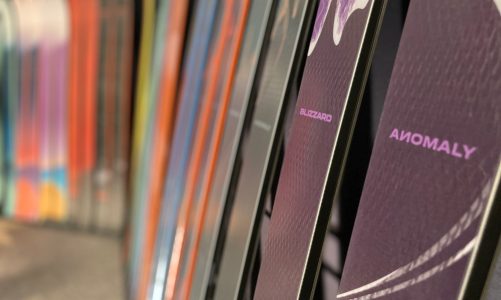
I’d also say that the Kore 100 Ti doesn’t feel remarkably energetic. It doesn’t have carving ski rebound (see some fairly low camber lines). It doesn’t feel dead, but if having snap and pop is important to you, check out a Blizzard Anomaly or Salomon Stance Pro 96.
Head Kore 100 Ti Review: Bottom Line
The old Head Kore I had a love/hate relationship with. It felt like a precise ski that gave me solid support on firm snow without wearing me out. At the same time, the lightweight made the ride a little harsh. It was appealing to intermediates through experts, while being a little too demanding in challenging conditions/terrain for progressing skiers. Hard-charging experts may not have found the support they were looking for.
I think Head absolutely knocked it out of the park with this one. They managed to make this ski much more accessible to progressing skiers, while still giving advanced and expert skiers a lot to chew on. If you’re looking to improve around the mountain, but know you ski with a more directional style, this is a great option. If you’re an experienced skier who likes a precise ski, but wants it to be a little easier on the legs and more intuitive than some of the harder chargers, I’m not sure there’s a better option for you on the market right now.