
[Editor’s Note: This piece was originally published in 2022, and has been updated with the latest updates on sustainable ski gear and practices.]
More sustainable ski gear is the future.
It’s no secret that the ski industry and climate change have a complicated relationship. Warming temperatures and snow don’t mix well, which inevitably means less skiing. At the same time—like any other industry—we contribute to climate change. Between manufacturing and transporting skis around the world, snowmaking and other resort operations, plastic use, and just general waste, we’ve got room to improve.

The good news? There’s a whole lot the ski industry is working on to improve their practices to cut carbon emissions, lower consumption, and becoming more efficient in multiple different arenas.
The brands
Sustainable material alternatives
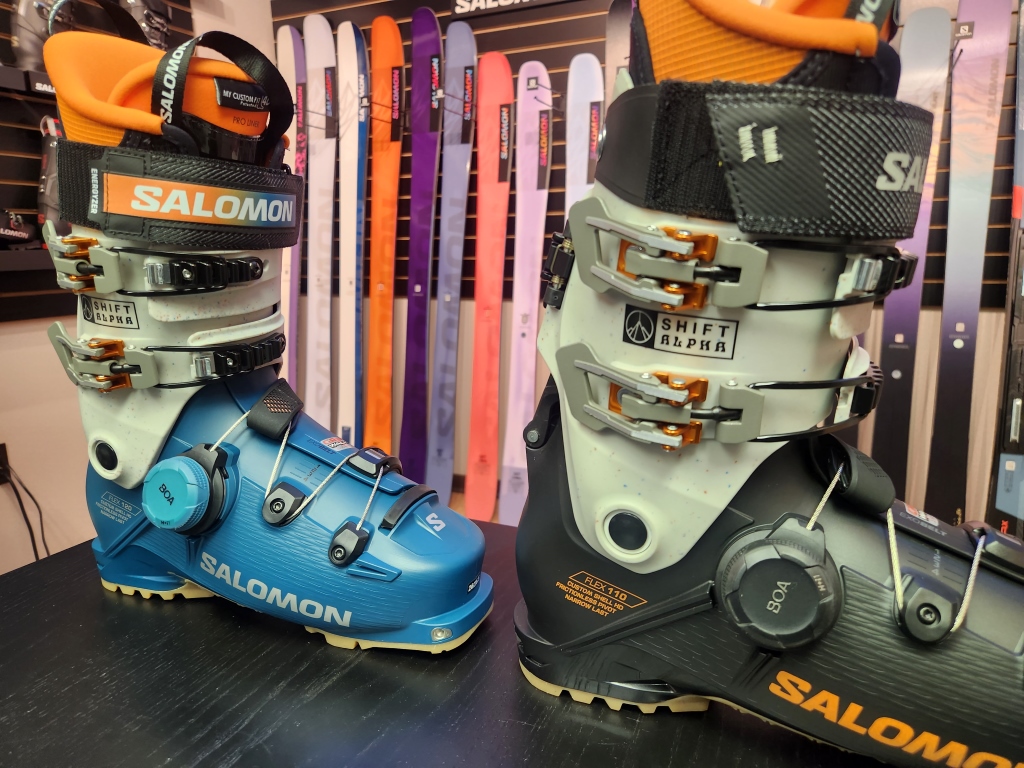
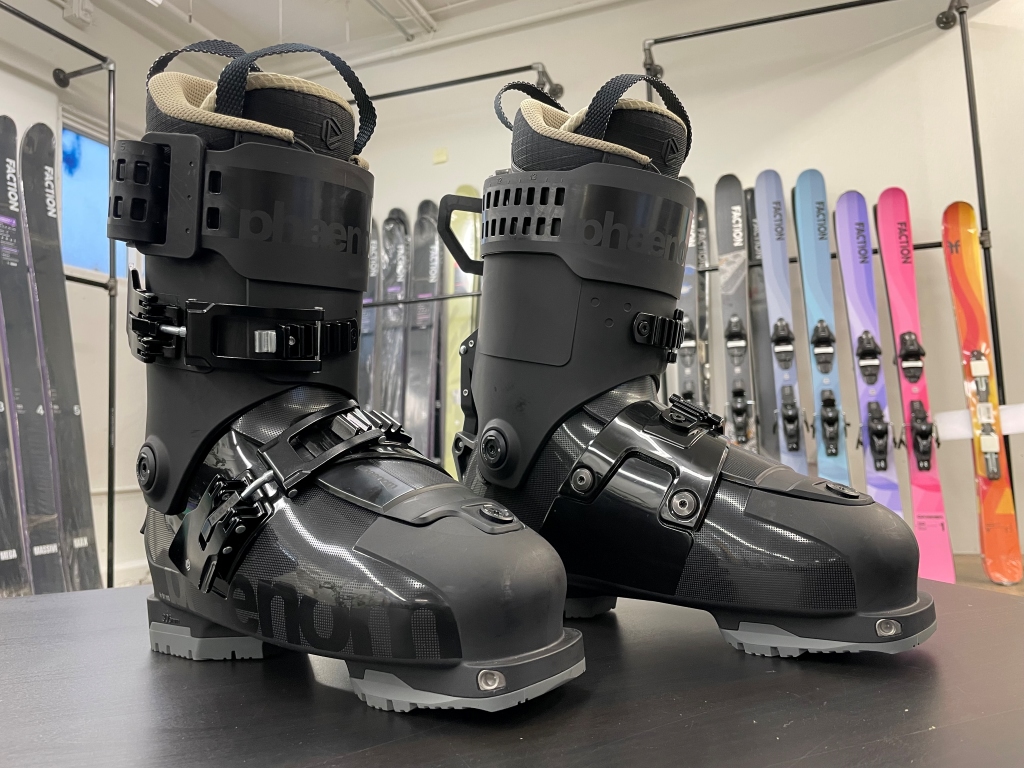
Skis are filled with a huge variety of materials. From wood to plastic and glue, there’s tons of heavily consumptive materials that have an impact on our planet. Ski and boot manufactuers are implementing new techniques to use recycled materials, namely plastic. The new Salomon Shift Alpha boots (pictured left) have a recycled plastic in the upper cuff, which creates a very cool speckled color. The all-new Phaenom boots are entirely made with 30% recycled plastic (the most you can use before characteristics of the boot start to change). Tecnica uses recycled materials in their junior boots, and is increasing recycled materials in their liners. A great use of foam without changing performance.
Faction shops local
Faction is committed to sustainable practices across their whole production process. Using sustainably sourced, FSC Certified materials, they’ve significantly cut down their waste and footprint. Faction also sources as many materials as possible locally to reduce tranport emissions.
Maybe the most impressive stat around, Faction’s factory runs completely on renewable energy and biomass heating. By no longer using oil, their annual CO2 emissions is down by 10 million kilograms. That’s equivalent to burning over a million gallons of gasoline. A healthy chunk.

Rossignol recycles
Last year, Rossignol announced their Essential ski, a new model made from mostly recycled materials. What’s especially unique, is the post-ski process. Once you retire that ski and return it to Rossi, the materials are much more easily recycled with an improved sorting process. This allows Rossignol to more effectively isolate each material, making it easier to reuse in the next product.
While we aren’t expecting this to be quite as popular as their Experiences or Sender skis, they are showing this production (and post-production) model is possible. Getting to more circular economies is essential for creating truly sustainable ski gear. By putting effort into such a rad project, Rossignol is setting trends and laying a path forward.

Boots get a second life
So that’s new with skis, what about boots? Ski boots are made nearly entirely out of plastic, making for a significant carbon footprint. Historically, ski boots have been difficult to recycle. With complex liners, multiple plastic types, and a variety of metals riveted on, ski boots historically have been difficult to recycle. Now, Tecnica has a new recycling process for repurposing all the different materials found in ski boots. Tecnica hasn’t found a recycling partner in the United States yet, but if you’re based in Europe, simply connect with a local shop that’s a Recycle Your Boots partner and drop off the old boots. Then get fitted with a fresh pair made with said recycled materials!
Going into the 23/24 season, both Tecnica and Nordica are diving into using recycled materials in their ski boot lineup. A portion of Tecnica’s liners now features recycled C.A.S. material, and Nordica’s new Unlimited boots are made fully with recyclable materials. The junior’s Tecnica Mach1 Team boot is made from recycled materials.
The ski areas
Obviously, the production process is not the only pinch point on the environment. Ski areas require massive amounts of, land, energy and water to operate. Loads of them are finding creative ways to cut their impact.
Aspen Snowmass uses recaptured methane that leaks from a local coal power plant to power their resorts and hotels. Not only does this process provide energy, but also prevents the ultra-dangerous methane from being released into the atmosphere.
Both Jackson Hole and Berkshire East Mountain Resort are 100% supported on solar and/or wind energy. That’s pretty incredible. The coolest part? On Berkshire’s website, they cite how the energy source stabilizes their electrical expenses, allowing them to invest into other parts of their business comfortably.

The shops
Despite all these awesome innovations to the ski production process, it won’t entirely solve the whole problem. Outdoor brands are constantly creating new products that folks buy up to have the latest and greatest technology. This leaves plenty of lightly used gear (still in great shape to use) out on the market, or even in a landfill. Retailers are stepping in to provide a designated market for used gear. Instead of needing to post your gear to sketchy Craigslist or Facebook Marketplace on your own, filter through spammy messages and negotiate on price, you can let the retailer do the work for you.
We’ve been big on used demo skis for a while, but recently got our very own trade-in program rolling. If you’re ready for a gear refresh, you can take a peek at what we can offer you for your tired pair of skis. Then, use that credit towards a new purchase. This way, you save money, clean out the garage, and get someone new on your old skis. Some call this a win-win-win.
You’ll also find companies like Patagonia and The North Face offer entire markets of used and repaired gear from their brands. They heavily discount these products, giving you stellar deals on high performance gear.
So what about the skiers?
When heat waves are raging and things seem gloom, it can be easy to look at these stats and say “what difference in the big picture does this really make?” And that might be true. It’s also true that these moves provide a model for other companies outside of the ski industry for what they can do to lower their footprint.
So, what can you do to help make it clear that you want more companies to do this? Vote with your dollar! Buy used when you can. Maybe buy a ski that’s made with recycled materials, or from a company that supports environmental practices. Email your favorite mountain and ask what they’re doing to cut their footprint. Support Protect Our Winters. Show that this is something you care about as a skier. Even if our little changes may not single-handedly stop climate change, they certainly can’t hurt. As environmental advocacy legend and Patagonia founder Yvon Chouinard says, “the cure for depression is action.”

