This post was updated on 4/2/2020.
If you’ve skied Japan, you probably couldn’t shut up about it.
If you haven’t, it’s gotta feel like missing the cool kid’s birthday party.
The Japow secret was already out, at least in the powder-skiing world. But with a seemingly absurd number of pros (like Chris Davenport and Julien Regnier), photographers (like Grant Gunderson), industry folks, and Joe Shmoes flocking to the Far East for one of the most epic snow years in the history of the Rising Sun, it begs the proverbial question: Is Japan really that good?
Short answer: yes. Caveat: You want to hit it when it’s happening. Like everywhere else. Update: Winter 2019-2020 disappointed with below-average snow totals in Japan. But we still stick to our guns on this one. Between frequent snowfall, cool terrain, sushi bars, and natural hot springs (onsens), there’s plenty of insurance to make your trip memorable even if you don’t get the deepest deep.

Let me explain:
1. The Snow, the Snow, the Snow
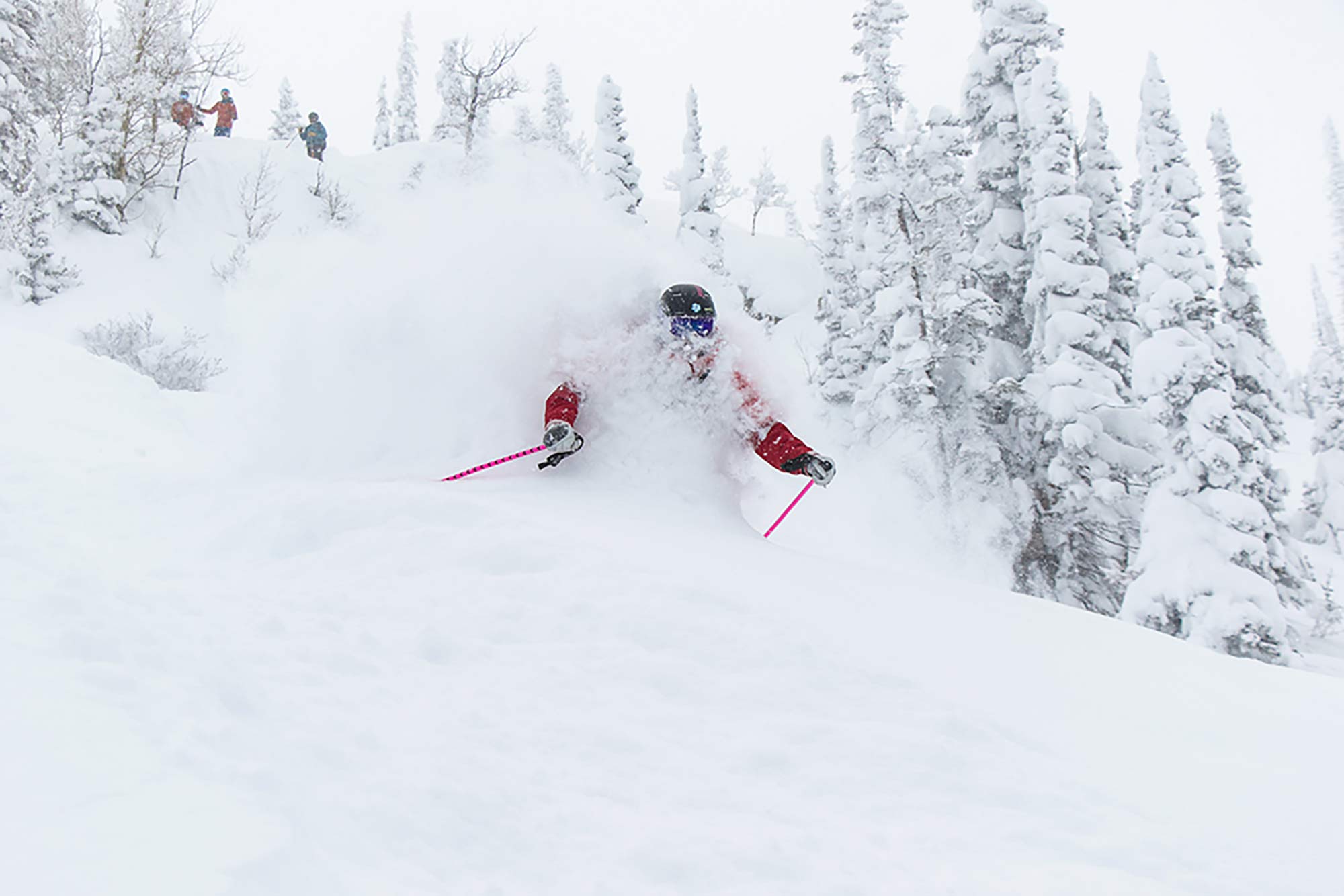
By now you may have heard of that frigid Siberian wind that collects moisture over the Sea of Japan and dumps it on the first mountains it finds, the peaks of Japan’s main island, Honshu, and its little brother to the north, Hokkaido. The result: seemingly constant snow. A number of resorts report annual snowfall of more than 600 inches. Sometimes it snows that much in half-a-winter. Other places just don’t bother to count.
How does this translate? On my third run at Niseko, I slashed a turn between two skeletal ice trees, blasting my face with dusty powder, and dubbed it the best run of my life. The next day, deeper snow on steeper terrain off the resort’s summit took the title. The next day, and so on…
When the crew and I found our way to Asahidake, a single ropeway that accesses backcountry-style terrain on Hokkaido’s tallest mountain, the place shattered what I thought I knew. The snow swallowed my six-foot-five buddy as he straightlined. This is skiing Japan, we raved.
Thing is, while you go to Japan for life-changing powder, even “average” conditions can breed great days. We spent a day rollicking through the endless open trees of Rusutsu in heavy, wet snow, popping off supportable mushrooms and pillows without any bones to pick.

2. Many Mountains, Many Means
Despite the mystique, though, skiing Japan is still, well, real. Runs get tracked out. Droughts happen. Even rain happens.
Luckily, you’ve got a ton of options for your attack. You’ll find ski resorts everywhere, totaling more than 500 country-wide. Hire a guide to show you in-bounds and sidecountry stashes on multi-mountain trips. Go touring, cat skiing, heli skiing. Rent a van and roadtrip.
Our program looked like this: After a temple, a sushi bar, a walkabout, and a couple thrilling grocery trips in Narita, we flew to Hokkaido and took a bus to Niseko, the most established and popular of Hokkaido’s resorts. We spent four nights at the base of the mountain, which gave us enough time to explore Niseko and day-trip to Rusutsu. Nights of ramen, onsens, food trucks, and lots of Australians gave way to Asahidake’s end-of-the-road tranquility. We drove there in a toy-car rental packed to the roof.

3. The People
Japow dreams can quickly make you forget what you already know about travelling internationally. It’s as much about the people as the life-list objectives. And the Japanese are downright awesome.
During our most frenetic five-minute commute to the Asahidake ropeway, our toy car lost track of the road. Skid, thump, slow leak. Luckily, the tire made it to a gas station on our drive back to Sapporo. When my buddy communicated the issue to the attendant at the pump, the man bolted for the station’s garage and hustled back with an air compressor, laughing and smiling and saying “Hai!“—a multi-purpose expression the Japanese often use to show acknowledgement or say “yes.”
Did I mention grocery shopping? None of the cashiers who processed my sushi, pastries, strange jerky, or single malt purchases said a word of English to me. Nor did they stop talking cordially anyway, maybe poking fun at my cluelessness or applauding my taste in beverage? The interactions invariably ended with a small bow and an “arigato gozaimos,” the most common expression I heard for “thank you very much.” I tried to return both as seamlessly as I could.
The Japanese follow the rules, part of the reason it’s worth reading up on various resorts’ attitudes toward off-piste skiing and ducking ropes. But they have great senses of humor. They’re good-natured. And even if they can’t understand you and you can’t understand them, they want to help.
4. The Extras
Modern Japanese culture and infrastructure pays close attention to convenience. As such, you can ditch your yen coins in vending machines that serve soup, tea, coffee, hot chocolate, even beer. Bullet trains can take you straight from city to mountains. At sushi bars, you can point to items on the menu saying “I’d like this please” (“kore o kudasai”), and watch, sipping green tea, as the chef prepares your unagi. Various companies can shuttle your bulky ski roller and overstuffed boot bag ahead of you to your hotel.
But onsens take the “Best Extra” crown. A sulfury product of Japan’s volcanic activity, onsens appear in many shapes, sizes, and setups. Most separate genders, restrict tattoos, and cost a small fee. All come with back-saving soothing properties and abundant nudity. In fact, at traditional onsens, you’re not allowed to dirty the water with a suit. If it sounds weird now, it won’t once you’ve lost yourself in the Japanese white room on the best powder day of your life. Then, you’ll try everything once. Even horse (my biggest mistake in two winters of Japan ski-cations).
Bottom Line
Japan sounds far away. There’s a language barrier. And you may have just learned that you can even ski there. These are common reasons most skiers will go a lifetime without tasting Japow. But with sophisticated travel systems, helpful people and resources (beta!), several Ikon and Epic destinations, and the potential for the best turns of your life, Japan is worth the learning curve.
Ready to go? Don’t forget these seven crucial secrets as you plan your trip.