For Colorado adventure skiers, springtime means hunting season. The prey? Couloirs.

Dragon Tail Couloir is a Colorado classic. Located in Rocky Mountain National Park near popular Bear Lake, the line cuts and twists through raw cliffs and spires, dropping more than 1,600 vertical feet from the shoulder of Flattop Mountain. The surroundings mark one of the state’s most iconic places. Tyndall Gorge, which runs perpendicular to the base of Dragon Tail, evidences the Rockies’ glacial history. Long’s Peak dominates the skyline. Bear Lake offers some of the best bang-for-your-step views in the park.

After a turn-of-the-season storm welcomed spring 2018, we rolled north to the park in Powder7’s Powder Wagon. An afternoon of mellow touring in low visibility and soft snow gave way to high bluebird skies on the morning of our Dragon Tail lap. Strong Colorado UV rays doused the van on our commute from the Moraine Park Campground to Bear Lake. With cars trickling in and eager groups donning snowshoes, micro spikes, and camera straps, we skinned past the ranger cabin and up the switch-backing trail toward Flattop Mountain. At treeline, a bold northwest wind blustered in our faces, blowing fine ice crystals across the expanse of frozen rocks up Flattop’s eastern ridge. Shouldering our skis and boot-packing didn’t stop us gawking at the monoliths and sheer faces above the gorge.

The High Lonesome
Rocky Mountain National Park sees more than four million visitors each year, and because it stays open longest, Bear Lake Road carries the brunt of the park’s winter traffic. Dragon Tail doesn’t claim secret-gem status. Skiers in the local backcountry crowd know you can reach the entrance with a relatively easy, sub-two-hour ascent. Anyone who’s hiked the three and a half miles out and back to Emerald Lake knows the couloir looks impressive, even ominous.
But despite notoriety, Dragon Tail makes you feel tiny.

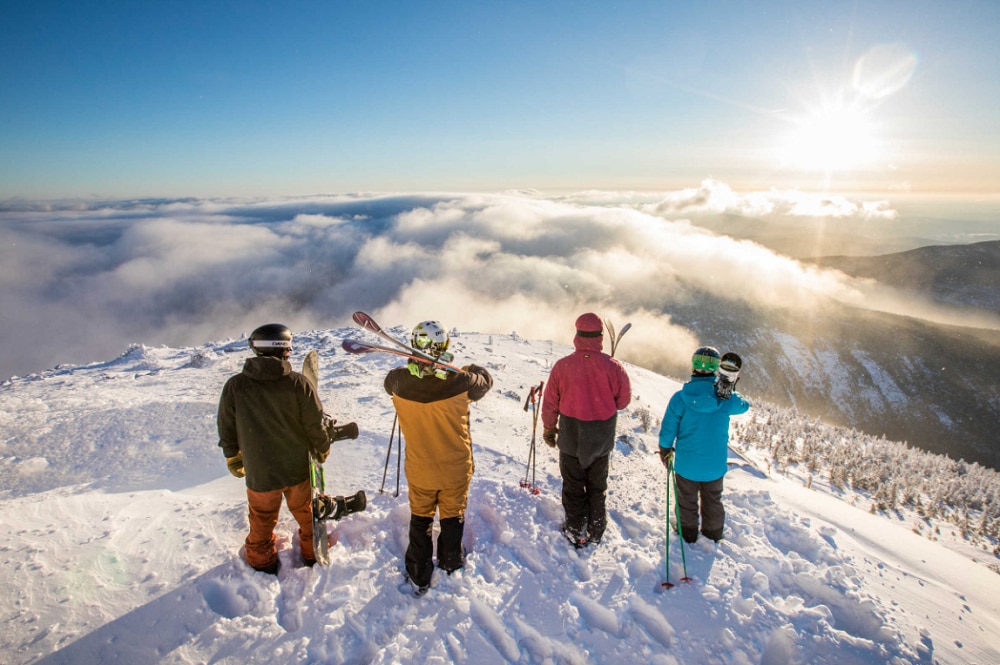
After we reached the couloir, we zipped up our collars, pulled buffs over our noses, and scoped. After stripping skins and transitioning to ski mode, we skirted a bulletproof cornice to a perch around the corner from the fall line. Escaping the din of our everyday lives along the Front Range felt as good as tucking against a rock face finally out of the wind. Ski all the lines like this in Colorado, and the addiction would barely peak. We checked radios, strategized, and reveled the anticipation.
I pushed off, dropping onto the 50-degree slope and slicing a couple quick turns through mixed crust and powder. When the snow turned surfy, I opened the throttle a bit before banking a hard left into a safe zone. Skiing steep terrain in soft snow feels electric. I took a minute to digest the scene. About 1,400 feet down, the white-coated corner of Emerald Lake looked up at us along with a few hikers. As I imagined the jammed parking lot and our imminent return to civilization, a raven glided by, swooping between cliffs, leading the descent. We were in.

Slaying the Dragon
We emerged from the dead quiet of our jagged hideaway about 10 minutes later. Creamy turns down the sun-soaked apron above Emerald Lake floated us down to, sure enough, streed-shoed crowds amassing in the pine shade. As we hydrated, another skier descended the bottom of the couloir.
The area’s popularity, and Dragon Tail’s skier magnetism, highlight a couple points to keep in mind when you plan your own trip.
1. The couloir faces southeast and receives ample sun. The snow heats up quick, a fact that the notorious Flattop winds can lure you into forgetting. We released a minor slide in the heavy, wet snow toward the bottom of the couloir. As always, read the avalanche and weather forecasts before you go. Be sure to start early.
2. On a nice spring day, several groups could ski the couloir, and some of them may climb straight up the route rather than skin or hike around. Be wary of the possibility of people below or above you as you descend.
3. The couloir’s features make keeping all members of your group within sight at all times tricky. Use radios to communicate from one stopping point to another.
4. Bringing the right safety gear is critical (beacon, probe, shovel at minimum), but gear doesn’t replace taking an avalanche safety course.

Next Up
If Dragon Tail ends up being your first foray into skiing big lines in the Bear Lake area, expect to be hooked by the aesthetics and the intricacies of the topography. Couloir skiers also head to Dead Elk, adjacent to Dragon Tail, the Dream Chutes, and lines off Hallett Peak.
Skiing big-mountain lines got you thinking about badass skiers? Read Powder7’s interview with Lynsey Dyer.