By Marc Peruzzi
Don’t let the bleak days sour you. Skiers and skiing will come out of the pandemic winter better than ever.
As if skiing wasn’t challenged enough by climate change and a disturbing lack of diversity. Now the sport has to deal with the fallout of overcrowding in bounds and out brought on by the super passes and a skier base juiced to get out from under Covid-19 restrictions.
If you’re a resort skier who’s sickened by no fresh tracks after 10:00 a.m., or if you’re a backcountry skier who’s found your favorite trailheads overrun, it can feel like glisse armageddon. But I’m here to tell you not to despair. Skiing—all skiing—will emerge from these times healthier. The experience can be saved. That’s because, while skiing as an industry is slow to change, skiing as a passion has never stopped evolving. It can’t. And skiers, not resort executives with spyware, but actual skiers, are a resilient lot. And they will have their say. Someday soon, the mega resorts will grow less crowded, the Mom & Pops will rebound, and our collective backcountry access will burgeon. This will happen because skiers will demand it.
OK, I’m prognosticating a bit, but don’t discount the resiliency of skiers. I once spent a few days ski touring with a 10th Mountain Division veteran in Utah. As a teenager, George Sormer and his Jewish family fled the Nazis in the prelude to the Holocaust. Sheltering him from the horrors of the day, his parents sent him to Bates College in Maine, where he won every ski race he entered for a few seasons. As he raced, George’s uncles and aunts were dying in concentration camps. So after college, George went off to war. At first he taught army recruits from Oklahoma and Louisiana how to ski in the Colorado high country. Then he went overseas. George wasn’t gung ho, but he did his part. After the war he moved to Utah to ski Alta. Because he loved powder and the solitude of the wild mountains, he helped pioneer backcountry skiing in the ’60s and ’70s. He skied until his death in his late 80s. Skiers don’t give up the sport easily.
Skiers fight. The present times are simply no match for us.
That spirit is all around us. As a magazine editor, I was once invited to heli-ski in the Ruby Mountains of Nevada. Solo, I was grouped with a party of old friends—two married couples from the outdoor industry. It wasn’t just another luxury trip for them. One of the women was dying from terminal cancer—which happens to be the name of a famous pencil couloir in the Rubies. Her energy was low. She was pale and in pain. But when she heard the name of the chute across the valley, she smiled. And even though I’d just met her, my eyes pooled behind my goggles. She was a beautiful skier. I made a point of skiing through her tracks on what would prove to be the last run of her life—the ethereal pixie dust that is Nevada’s rarified powder contrailing behind her. I breathed it in.

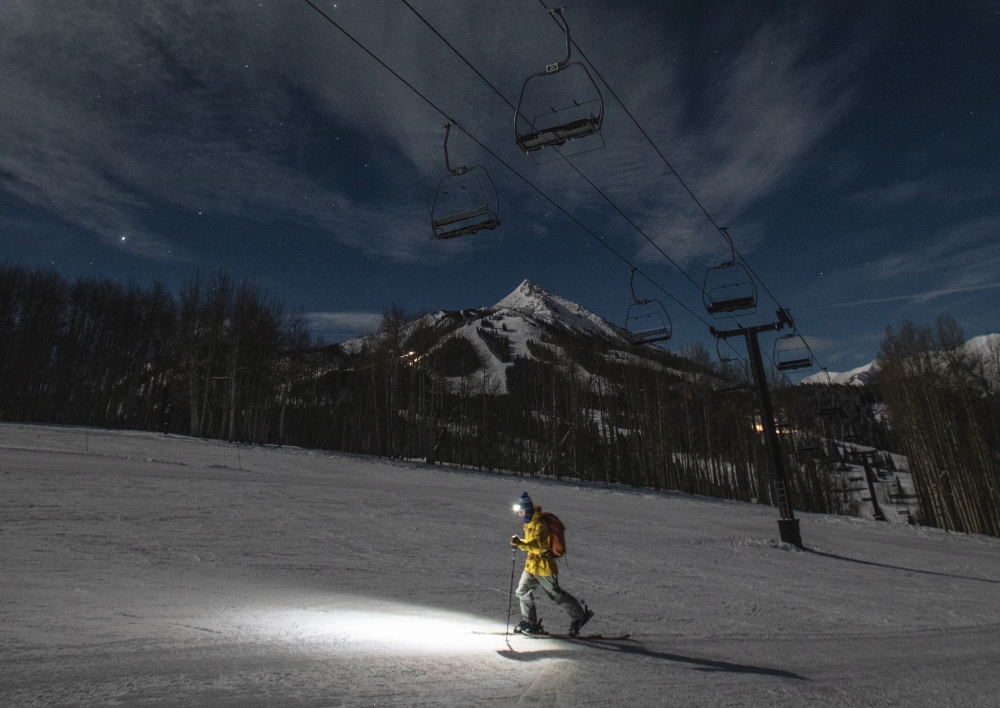
Skiers fight. The present times are simply no match for us. The more ski resorts jack lift tickets and—in certain markets—season pass pricing, the more skiers will return to what skiers did before there were lifts—and hike. The boom in touring gear sales is a testament to this. Same with the boom in resort uphilling, nordic, guided skiing, and the sudden success of the controlled experience that is Bluebird Backcountry. (How long until that model gets replicated, not just in Canada but in the Lower 48 as well?) In the winters to come, expect human-powered skiers to pressure land managers across North America to open more winter roads and increase access.
Some of the work I do involves creating “envisioning” documents for some of those mega resorts. One exercise in the meetings that inform the vision is to simply imagine. Try that with backcountry skiing. Twenty years from now I see far more access to human-powered skiing. More guides services for vacationers. European-style search and rescue operations complete with helicopters and reasonable rates. And hut and yurt systems connecting the best skiing. This will happen because, while the public and public land managers have lost their appetites for new resorts and all the infrastructure that come with them, skiers are just whetting their appetites for low-impact, human-powered skiing. We can have backcountry skiing and wild lands.
That’s the backcountry dreamscape. To fix the resort overcrowding problem, skiers will need to be even more forceful. The demographics are clear: The Intermountain West is filling up. And the past year has only accelerated this movement. This after so many small ski areas faded from the landscape over the decades or are still underutilized. We need a return to the affordable local hill. Think of Howelsen Hill in Steamboat or Suicide Six in Vermont as templates on the high end. Old lifts and shoddy lodges are fine. But a viable ski area to teach kids and have fun can be much simpler. We don’t need glitzy infrastructure. The first ski area in Montana ran rope tows up 2,000 vertical feet back in the day. (Would a ski area with a rope tow and a few thousand feet more of skiing to explore with skins catch on? Swap the rope tow for a double chair and that’s Silverton.) When I was in college in Northern New Hampshire, a few folks reopened a long defunct ski area on private land. It had a few hundred vertical feet of skiing, but it had lights and a bar. My grandparents and their contemporaries used to drive to New Hampshire to ski such tiny little ski hills. A T-bar and a warming hut and a single Piston Bully is all you need.
Do ski areas exist to sell $15 Sysco cheeseburgers? Or does the soul of skiing still matter?
As for the mega resorts, change is on the wind. Whether that change produces equitable results is anyone’s guess, but the reservation system in play across much of Colorado this winter should not be waved off as a one-off affair. In Deer Valley, Utah and at Loon Mountain, New Hampshire back east, skier visits have long been capped to preserve not just safety, but the experience. A lifelong resort executive (recently retired) told me that capping skier numbers is in our short term future. How could it not be? The combination of ever-faster lifts and, at some ski areas, a return to the crowds that we haven’t seen in decades, means that not only are the lines long but the runs are crowded too. It’s pretty easy to argue that the experience is being ruined. Right now, ski area operators are investing in more winch cats because the current load of skiers is pushing so much snow downhill each day that they need to push it back each night. The question will be how to cap skier visits in a fair manner. The battle will be between greed and purpose. Do ski areas exist to sell $15 Sysco cheeseburgers? Or does the soul of skiing still matter?
I know where skiers stand on that issue. Even if we as global citizens choose not to reverse the effects of climate change, in some future dystopian, post-apocalyptic world, if there’s occasional snow in the mountains, there will be skiing. The ski industry is not skiing. Skiers are skiing. And skiers are resilient.
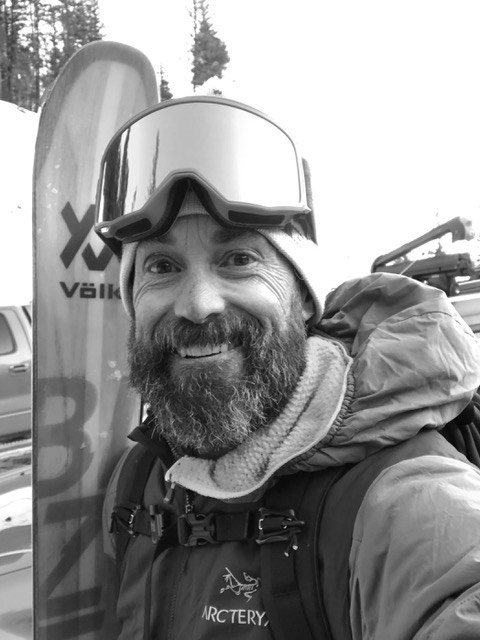
Marc Peruzzi has been in the ski industry since age 13 when he waxed skis for neighbors at $5 a pair. For the past 20 years he’s written about skiing for Mountain, Outside, Powder, Skiing, and more.