It’s not every year that one of the few binding manufacturers releases an all-new design and product. While skis come and go, bindings tend to stick around. And while the name and look of this binding may sound familiar, the design is decidedly different. Meet the Marker Griffon X. This is the latest binding from Marker that builds off of their legendary Griffon that you see on thousands of skis around the world. So, what exactly does the Griffon X have to offer compared to the OG? We’ll dive into all the technical specs, why they made the move, and who the binding is for in our Marker Griffon X review.
Marker Griffon X Review: Field Notes
So, what’s the story here? Marker spent a ton of R+D and engineering efforts here to redesign their binding with the main goal of dramatically lowering the stack height and reducing the footprint of the binding on the ski.
Why these goals? A lower stack height generally provides a more intuitive and responsive feel. Where high stack heights found on race and carving skis give more leverage for higher edge angles, freeride skiers aren’t looking for that. They want quick, responsive movements to help react to the terrain more quickly. At 9mm in the toe and 14mm in the heel, this binding is officially the lowest stand height alpine binding on the market right now.
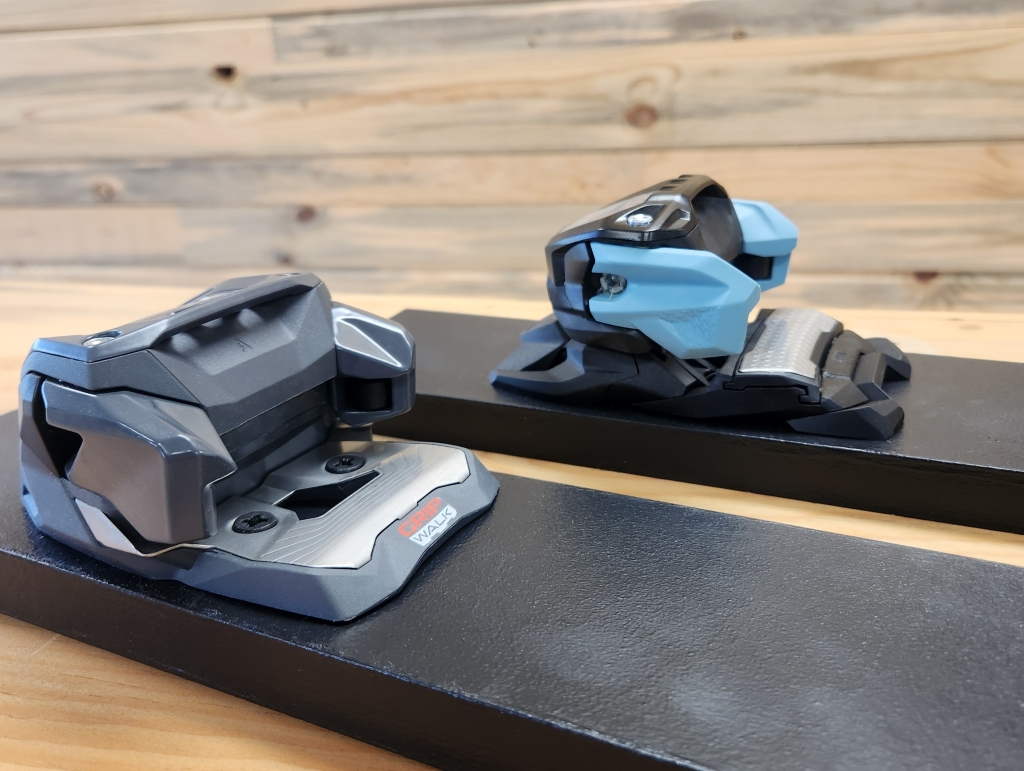
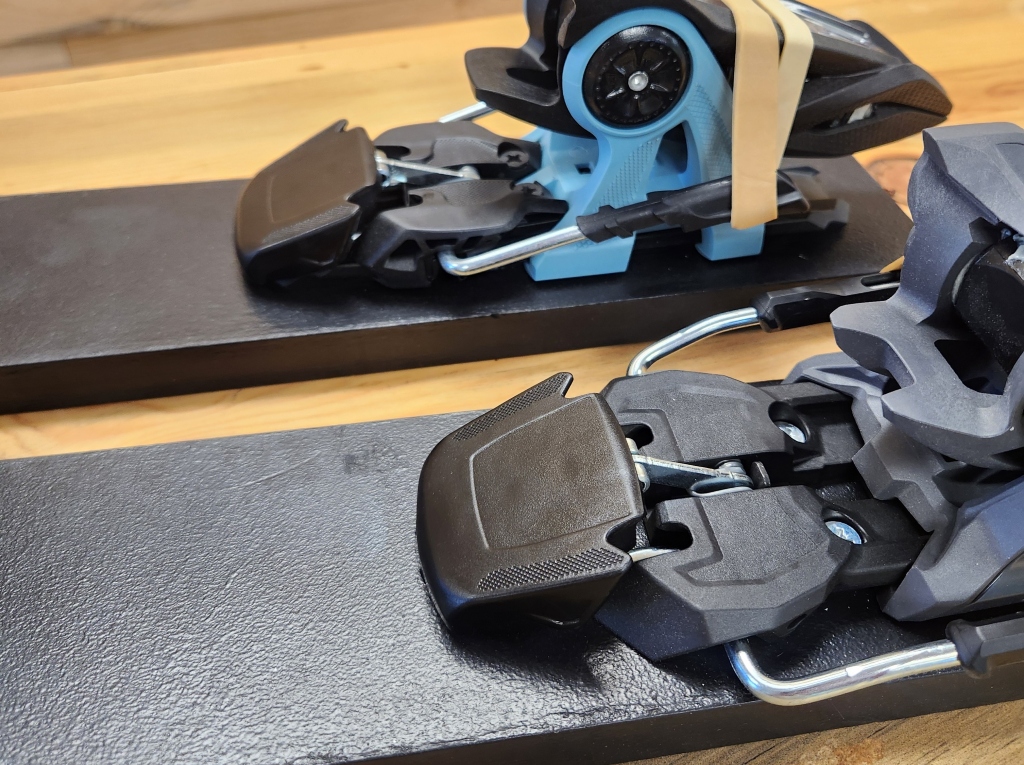
As for the footprint, a smaller binding footprint (essentially the surface area of binding on the ski) helps the ski retain its natural flex. Long binding plates (which are great for stiff race skis) prevent poppy or more lively skis from transferring that full feel up to you. Remarkably, Marker accomplished this without changing the drill pattern between the two Griffons.
While we don’t have exact elastic travel numbers for the Griffon X, it’s safe to assume that no changes were made to that part of the binding. That puts it right around 30mm in the toe and 16mm in the heel. That’s not as juicy as the numbers you get from some other bindings, but as we’ll discuss below, there are some trade-offs to be made up for.
Here are some more technical specs:
Weight: 2260 grams
Stand Height (toe/heel): 9mm/14mm (5mm of delta)
Boot Sole Length Adjustment Range: 20mm total
I was lucky to ski on a pair of Griffon X MWerks for the whole last season on my Volkl Revolt 101s with a 100mm brake. I’ve also owned a pair of regular Griffons for the last few seasons, mounted on my Volkl Secret 102s, so I’m familiar with both bindings. I’ve also skied Look Pivot 15s, a whole slew of Salomon bindings, including the Strive 14, which I have mounted in my quiver as well.
I’d call myself an aggressive skier, but without any large drops or big freestyle hits, so I can’t speak to that kind of torque on a binding. I have been known to ski switch, but not with much style or finesse. I run a DIN of 8.5, so these mid-DIN options are a better fit for me than the 11s or 16+, like the new Marker Jester X.
The only difference between the MWerks edition that was released last year, and the Griffon X for this year is the magnesium wrap on the toe and heel. That gives the binding additional stiffness and rigidity. Great if you’re an aggressive skier or tough on gear, but not necessary, and not going to translate to significant on-snow feel.
The Skiing
It can be tough to quantify these changes without proper A/B testing or some third-party hardware to track performance. But, after spending a lot of time in different bindings, I can confidently say the Griffon X lifts the legend into a more modern ski binding field.
In a nutshell, the Griffon X levels up the skiability in a subtle but noticeable way. To me, it rides more comparably to a Strive or an Attack, with a low center of gravity and quick response time. The binding works to seamlessly translate that physical motion from ski boot to the ski.
We noted above that there aren’t wildly high elastic travel numbers here. But it’s not as though the binding feels too static. It feels plenty damp and vibration-absorbing. Some ski nerds have argued that high elasticity bindings can sometimes feel “vague”. While it’s hard to pinpoint, I like the way the Griffons balance the precision of a more traditional binding with the more modern intuitive feel.
Another thing I’ll add: with a delta of 5mm between the toe and the heel, despite being the lowest stand height on the market, it is not the most neutral. That reward goes to the Look Pivot series, thanks to their heel design. I’m not a freestyle skier who often lands switch; however, my amateur switch carves down low-angle blues and greens hardly feel affected by that. But if you’re a truly centered skier who likes to be perfectly centered on your skis, you may want to consider something more neutral.
Ease of Use
The Griffon X gets major points for ease of use. One of the hallmarks of the Griffon is the Anti-Ice rail on the toe piece. A fancy name for a relatively simple design—a slightly raised metal bar on the toe piece for you to kick snow and ice off your boots. Simple, yet effective. I know I’ve popped blood vessels getting frustrated with spring snow globbing up on my ski boot soles.
The Griffon X still has the relatively stiff heel action on the heel piece. It’s not the easiest binding to step into, but it does make up for that with how easy it is to line up your boot correctly in the heel piece. The Pivot’s turntable heel can get misaligned with the toe, and I’ve had issues clicking in correctly on Strive heel pieces. None of which are deal-breakers for those bindings. But, as a part-time ski patroller, I’m in and out of our ski bindings all the time. Holding a toboggan while trying to click into your bindings is no joke, and I don’t need to mess around with trying to line up my boot with the heel piece.
Durability + Reliability
Probably one of the strengths of the OG Griffon, and the Griffon X doesn’t make any compromises in this department.
The Anti-Ice rail is multipurpose in making it easier to step into your bindings, but also giving added durability to the toe piece. Most folks kick their boots on their toe or heel piece, and the rail gives you a safe and sturdy place to do so. The Griffon X also offers a metal frame in the heel piece, which adds to durability over time compared to composite and plastic options.
As for retention reliability, it comes as no surprise that the retention we loved about the Griffon carries over. I’ve had zero issues with pre-release or over retention. For me, even if it may be placebo, the reassuring loud clack you get after stepping into your bindings adds peace of mind.
Bottom Line
The Marker Griffon X levels Marker up to be in line with modern binding design. Bindings for everyday skiers are getting more and more inspired by “freeride” bindings, for their intuitive and responsive nature. As the absolute lowest stand height in the business right now, Marker is arguably doing it better than anyone. Combined with a bombproof design and construction, it’s just an evolution of one of the best ski bindings on the market that will help you ski better—without you really noticing any change.