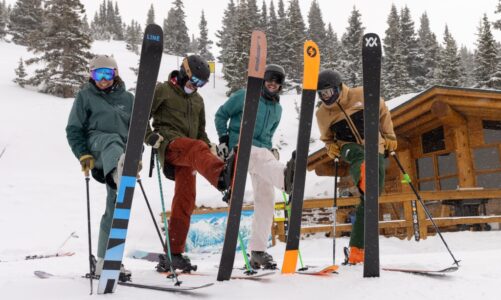
A full-blown powder ski returns to the QST collection.
When Salomon removed the QST 118 from its lineup after the 2021 season, plenty of freeride skiers felt some trepidation. The Blank entered the scene, and at 112mm underfoot, it quickly became a favorite in the mid-fat (or “wider all-mountain,” if you prefer) category. But some folks, including yours truly, still pined for an even wider QST.
Last year, we got the QST Echo, a worthy 50/50 ski that notably was R&D-ed on Cody Townsend’s “The Fifty” project. Now, the big one’s back. It lands in the QST lineup as the 2024-2025 QST X.
Salomon QST X Review: Field Notes
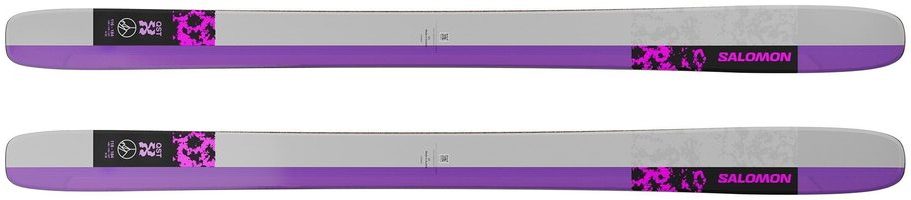
Salomon serves up the QST X in three sizes: 178cm, 184cm, and 192cm. It measures 140-116-127 with a 25-meter radius in the 184.
With its shape, profile, and construction, the QST X is more or less a mashup of two skis: the Echo and the current QST Blank. Three, if you include that QST 118. Its lightweight poplar-karuba wood core comes from the Echo, along with the recycled material in its sidewall (here, though, that recycled ABS runs the full length of the sidewall). Like the Blank, it features CFX, double sidewalls underfoot, and cork inserts in the tips and tails. Salomon says they extended the rocker lines in the QST X, but when I put it side-by-side with the Blank, the rocker profiles look pretty similar. If anything, the Blank has more tail rocker plus extra splay in the tips and tails. The X’s tips and tails rise lower and more gradually (which might be what Salomon means). Their shape looks more like the QST 118 and the Echo than the Blank, with its blunt tips. Both the Blank and the X run more camber than the 118 did.
The QST X weighs in lighter than both the Blank and the 118, at a dainty 1900 grams per ski (according to Salomon). For reference, the Blank, though narrower, lands around 2200 grams, as did the last version of the 118.
I skied the 184 in testing. Measurements: 5’7″ and a couple IPAs north of 160 pounds. I tested the QST X at Vail Mountain, Steamboat Powdercats, and Monarch Mountain.
Groomers
The Blank scores high marks for its all-mountain versatility. They may not be a majority, but a large crew of skiers in the last two years have run it as a daily driver. Why? Its short-ish turn radius (17 meters in 186cm) and reinforced sidewalls give it quickness and surprising maneuverability for a 112mm ski.
The QST X feels more like a quintessential powder ski. Its straighter sidecut (25 meters in 184cm) gives it a longer default turn shape and even though it’s also built on a double sidewall, the lighter-weight core packs less power on firm snow. The carving experience is more tip-and-go on the X (as with most wide skis), while the Blank feels quicker and more energetic. The X feels stable underfoot, thanks to beefed-up sidewalls, so you’re by no means going to fear for your life as you rail back to the lift. You can just tell that this ski would rather be drifting corners (smearing) than laying trenches. It is, after all, more of a full-blown powder ski. In my mind, few pow skis excel on groomers (Icelantic’s Nomad 115 being an exception), and few are terrible. The X lands somewhere in the a-ok middle.
One qualifier: The X’s low weight gives it an advantage over beefier pow skis for people who prefer sliding around to legit carving. It’s easier to handle and feels plenty sturdy under your foot.

Bumps and Trees
Not to be redundant, but the while the Blank feels relatively quick and nimble down bump lines and through tree alleys, the QST X feels more drifty. If you’re exploring either type of terrain in less-than-ideal conditions, you’ll want the Blank. Even in soft snow, 116mm will always be a lot of ski for negotiating moguls.
But if you find yourself hunting for stashes out where the wild things are, you’ll be pumped to have the X under your feet. I’ve never been on a ski with such a long radius that also feels so loose and light. It’s a fun combination (see “powder” comments below). When I got myself a little lost in some thick woods on Buffalo Pass, I didn’t feel like I was on a 184 (which would usually land on the long side of my ideal range). The X’s light weight, long-‘n-low rise, and plentiful taper ensured that I never felt too locked in to one direction. There are places where a drifty, light ski feels under-gunned, but powder-choked pines will never be one of them. Instead, you get to pivot on a dime, alter your line with minimal effort, and stay on top of all the blower snow you find. It doesn’t suck. Here, the X reminded me of the last iteration of the Rossignol Super 7, which is (say what you will) one of the best tree-pow skis ever made.

Powder and Mixed Snow
Ah, what we came for.
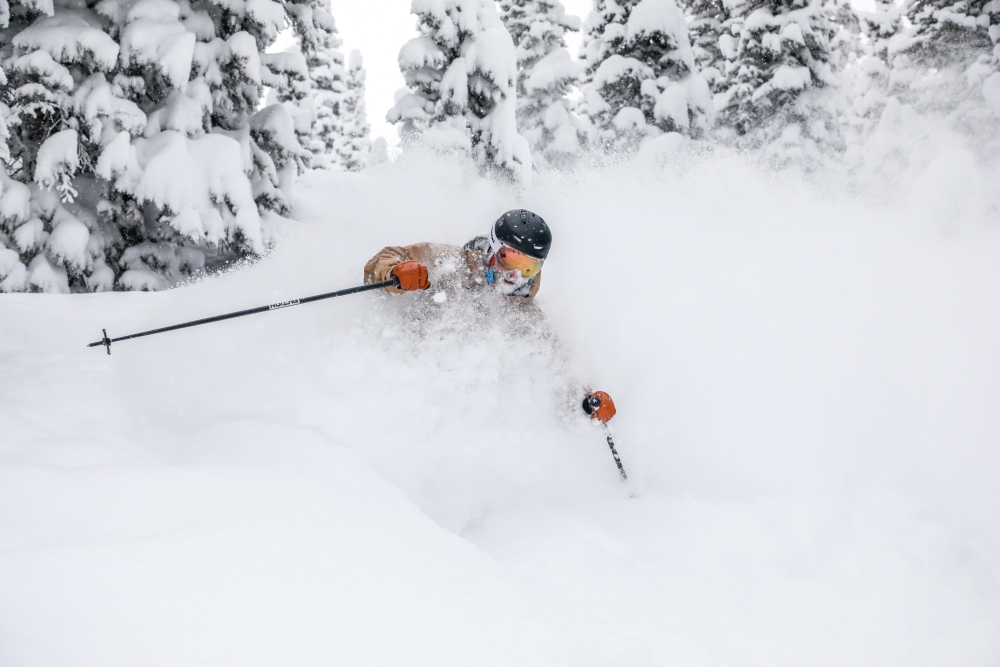
After my first day on the QST X saw groomers and some bump lines at Vail, the next two found 20+ inches of cold smoke on Buffalo Pass with Steamboat Powdercats. Pretty idyllic place to test powder skis. While I didn’t deserve Ullr’s bounty, I did feel like I got the X at its best.
I said I’ve never ridden such a loose and light ski with such a long radius/straight sidecut. Well, I was missing out. The X loves attacking the fall line with long, fast turns. It also loves going straight, unsurprisingly. But all that rocker and its sub-4,000 weight mean the X doesn’t beat you up or zap your quads (in good snow, at least). The skis may love straightish arcs, but they also love getting sideways. I experienced zero hooky-ness or grab when slashing and smearing. The skis skip over soft chop and, again, make whatever move you want whenever you want to make it. And they absolutely don’t feel like work, even at slow speeds on mellow slope angles (hello Buff Pass).
It’s true that few skis suck when you’re skiing blower pow, but not all of them stand out, either. The X did.
A nice kicker is that with the X’s weight, it’s absolutely a viable powder touring ski. Whether you use a Shift (2.0 version, anyone?), a Duke PT, a new Cast, or a full-tech binding like Salomon’s MTN, you’ve got a setup that’s manageable on the skin track (lighter, in fact, than several less-fun skis I’ve toured on) and dialed to enjoy the goods when you find them.
Downside
The caveat with those weight savings, though, is that you sacrifice some power and heft. In crud or heavy chop, the QST X doesn’t give you as much mass for blowing through whatever gets in your way. I’m thinking here of skis like the Rossignol Sender Free 118 or the Volkl Revolt 114 or 121. Those burlier skis glue you to a fall-line more than the QST X, and some people prefer them for stomping landings, too, especially in mixed snow. In big-mountain terrain with variable conditions, you might need to finesse the QST X rather than power it.
Some of this also hinges on who you are. I’m a small person, so it might matter less for me than for bigger people who charge hard (although Cody Townsend, who helped design the X, is quite a bit bigger than I am). For those people, Salomon did add basalt into the 192cm size for added smoothness and dampening. And for what it’s worth, I found the QST X to be sturdier than the Bent Chetler 120, another primo lightweight powder ski. So rather than a huge dropoff in stability, I’d put the X (again) somewhere in the middle. It’s plenty capable in mixed snow for most people, and they’ll absolutely take that given how fun it is in good snow. But there are people who will prefer more heft. Tradeoffs.
Bottom Line
Salomon is positioning the QST X as a playful, fully fledged powder ski that can crush in the resort or in the backcountry. I can’t really poke holes in their claim.
Much like the Echo, it skied better in normal resort conditions than I expected, meaning it can handle some variability. It’s not the most powerful or most sturdy powder ski on the market. But it’s in the running for best weight-to-fun ratio (a totally real and tangible measurement). And for most people looking to squeeze as much fun out of their powder days as possible, whether they ride lifts or hit the skintrack, the QST X will be a great fit.