[Editor’s Note: This post was originally published in 2020, and has since been updated with new lightweight skis and fresh advice.]
Turns out, people don’t want to work too hard.
That’s the gist behind much of the ski industry favoring lighter-weight skis than they used to. Ski builders increasingly use materials like carbon, balsa, nautical foam, graphene, and paulownia to shed weight. They favor designs ranging from cut-out metal sheets to full carbon with the same intent. The Holy Grail: skis that handle everything you throw at them without burning out your quads by lunch.

Before we get too deep, here’s a general breakdown of what we mean when we refer to skis as “light,” “heavy,” or somewhere in between. Keep in mind: this breakdown is meant only to give you a general idea of where different ski weights fall on the spectrum. It’s not meant to render the final verdict on how a pair of skis will perform. Many other factors contribute to that.
Less Than 3,000 g/pair – The Featherweights
Skis that weight in at less than 3,000 grams for the pair are your featherweight fighters. These skis typically want to be used for alpine touring, where cutting weight makes a huge difference. If you’re interested in ski mountaineering, but want something solid on the descent, this is a good class to look at. We typically don’t recommend these skis for resort use, save for lightweight skiers or folks who prefer ultra-light skis. Example: Kastle TX93
3,000-3,500 g/pair – The Lightweights
Skis in this range include both resort and backcountry options. We often talk about them as lightweight in-bounds skis or touring skis that are more optimized for the downhill than the uphill. Either way, this is a highly versatile weight range. Skiers who tour on skis in this range often demand slightly stronger performance going downhill. This range also includes lightweight resort skis for beginners through advanced skiers. Example: Nordica Enforcer 104 Unlimited
3,500-4,000 g/pair – The Middleweights
These skis tend to prefer the resort over alpine touring, although strong backcountry skiers who want to charge on the downhill will throw a touring binding at them. Some of the industry’s most popular models fall in this range. Example: Rossignol Sender 104 Ti
More than 4,000 g/pair – The Heavyweights
Skis in this category typically aim to provide the best and most reliable resort performance. They include wide powder skis, strong advanced-expert all-mountain skis, and a bevy of other options. You could certainly bring them uphill if you want, but you won’t catch any of us doing that. Example: Salomon Stance 102
What Makes Lightweight Skis Cool
In evaluating “lightweight” skis, we’re mostly talking about models in those first two weight classes. That said, ski weight is also relative to the skier’s build and skier type.
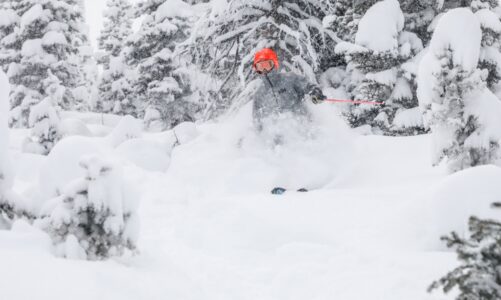
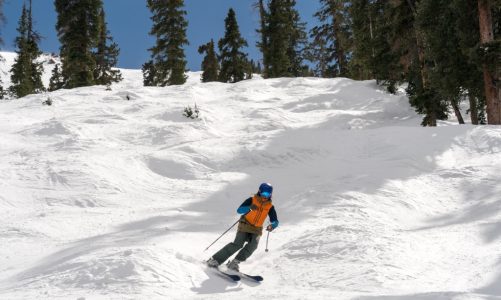
People love lighter skis for a few reasons. One, they are less tiring. Skiing moguls takes a toll on your body in a hurry, and anyone who has done it knows that things don’t get any easier once you’re tired. That applies across the mountain, too. Lightweight skis can allow you to ski better longer.
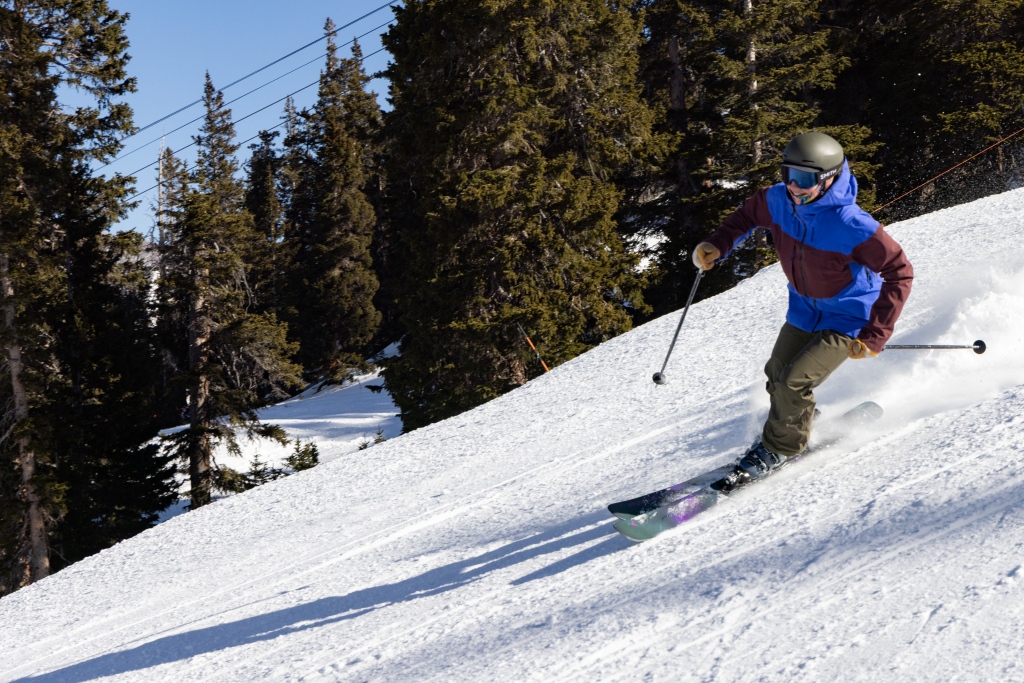
Two, saving weight often means increased maneuverability. With so many skis available to us, we shouldn’t have to work hard, right? We shouldn’t have to muscle $700 planks around the mountain, begging for our survival. Fun should come easier than that. If you’ve transitioned from steering clunkers through the bumps to getting on a pair of lightweight sticks, you know what a true epiphany feels like.
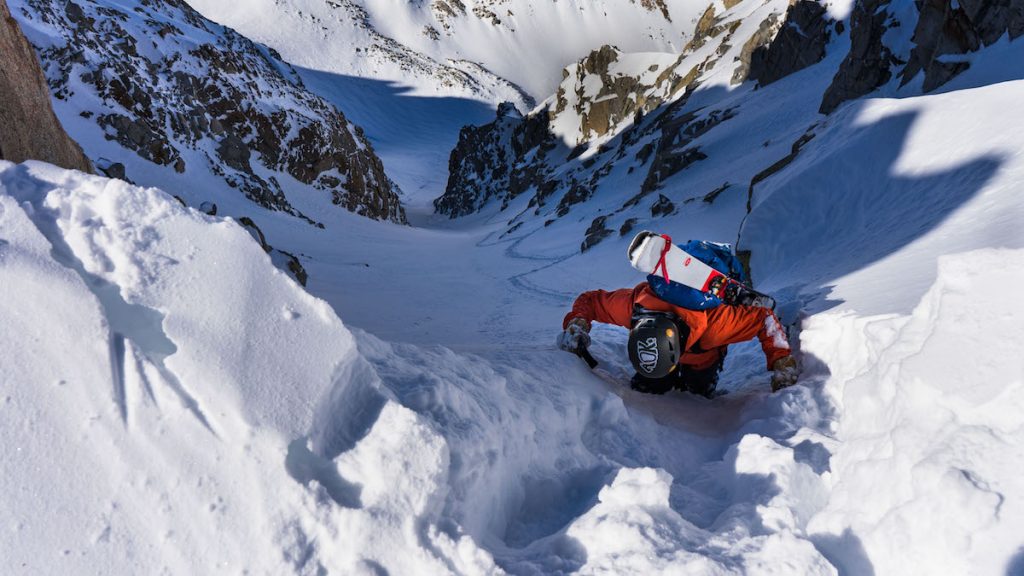
And three, lightweight skis lend themselves to adventures. Unless you can afford multiple cat or heli skiing trips in a season, you probably find yourself slogging up skin tracks or trudging up boot packs in the hunt for powder. Your perfect ski is one that devours steeps and mixed snow without making the climb a sufferfest. Today’s lightweight materials make that dream a reality.
Who Should Buy Them?
The ideal customer for lighter skis is someone who has something to compare them to—like heavy skis that beat them up. Powder7 staffers regularly chat with older skiers who ripped long, straight skis for years. These folks are often still strong and athletic, but they prioritize taking it easier than they once did. Being nicer to their aging bodies. If this describes you, you will love shedding some weight in your ski package.
Beyond the AARP club (sorry, had to!), the people most ripe for lighter skis are the ones who want to tour uphill. If you want one pair of skis for resort and backcountry, we recommend skis in the “Lightweight” or “Middleweight” class, depending on your height, weight, ski style, and priorities. If you believe in the quiver, you’ll have the luxury of choosing a purpose-built lightweight ski for alpine touring while exploring the resort on a pair of stronger, heavier sticks.
And the third group of candidates for lighter skis: everyone else. The beauty of new-age ski constructions is that you can find a pair of skis that feels strong enough to do everything you need it to without feeling clunky. Lifelong cruisers, who don’t care much about skiing faster or plowing through everything in their way, often love lightening up their skis. Additionally, plenty of strong skiers prefer lightweight skis if they like a loose ride or catch a lot of air.
Drawbacks
If you took basic economics, you probably learned about “opportunity cost,” the concept of sacrificing something to get something else. Unfortunately, that notion also applies to skis.
When you choose lightweight skis, you often run the risk of losing some performance. Skiers typically feel the difference most in mixed snow conditions, especially hard or refrozen snow, chop, and crust. Heavier skis often feel more confidence-inspiring in these types of conditions because they feel more glued to the snow. Dainty skis can get bucked or deflected easier by cut-up snow. So while we did say that lightweight skis can help you ski longer better, the exception is when they get tossed around in choppy snow rather than plowing through it. That can make you just as tired as spending the day on skis in the heavyweight category.

When to Bulk Up (and Why Not to Sleep on Metal)
Being gear nerds, we love new trends. So we’ve been excited as anyone to try out all the new lightweight skis over the last few years. But we can’t in good faith recommend those products to 100 percent of skiers 100 percent of the time.
When you’re charging through back bowls or navigating mashed potato snow at 3 p.m., having some more heft under your feet goes a long way. Especially if you ski fast. So for people who ski in long arcs and regularly find themselves Maching down dicy terrain, we recommend taking a look at skis in the heavyweight category. Sometimes, you need to drop the hammer—and not all skis are built to do that.
Often, the skis that are most able to handle mixed snow conditions and provide the smoothest and most reliable ride are the ones built with metal.
What’s up with that? Well, not all heavy skis contain metal, and not all skis built with metal are heavy. Far from it. So, when you evaluate metal skis versus non-metal skis, consider other factors at play. How much does the ski weigh? How much metal is there? How much rocker? Like lightweight skis built with wood and carbon and magic, skis built with metal have also come a long way. It’s possible for an intermediate to prefer the right metal ski, just as it’s possible for an expert to prefer a lightweight ski sans metal. It’s all about style and terrain preference.
Our advice? Demo skis if you can, and be sure to try a lightweight pair and a heavier pair. If you can’t…well, call a ski expert and pick their brain. Ours are available at: 720-674-5443.