It’s quickly become one of our top binding recommendations at the shop: the Salomon Strive 14. Salomon launched the Strive binding series for the 2022-2023 season. It’s not often that a brand releases a completely new design for a binding, so when it does happen, it’s pretty exciting stuff for the ski industry. Now that a few years have passed, this gear writer has two pairs of Strives in their quiver. We wanted to break down who this binding is best for, how it stacks up against the binding competition, and provide some tech specs for the real gearheads. Dive into the details in our Salomon Strive 14 review.
We’ll be straight with you. This one’s for the gear nerds. Ski bindings are all held to the same safety and reliability standards. When it comes to whether one binding is safer than another, there’s not one binding that’s better than another (save for the Tyrolia Protector). Anything on the market will serve you well. But, if you love gear and you love the nitty gritty, there are a few differences in how a binding rides and its ease of use. And you know us, we love gear.
Salomon Strive 14 Review: Field Notes
I picked out my first pair of Strives the year they came out. I decided to take my Salomon Shifts off my Moment Wildcat 108s (because I had never toured on that setup), and figured the Strive would be a good fit. Salomon doesn’t hesitate to admit that the Shift somewhat inspired the Strive. The toe piece shapes are similar, using a vertical retention spring rather than a horizontal one that you might see on a Salomon Warden or Marker Griffon. If you ask me, it looks quite aerodynamic as well (but I’m not sure that matters a few inches off the snow).
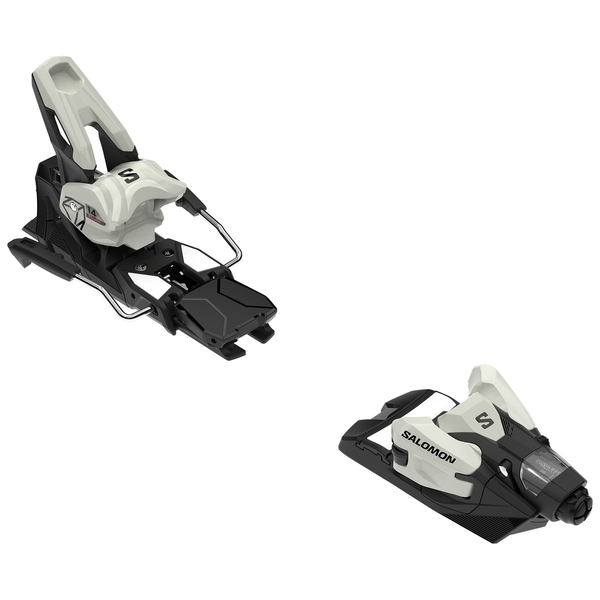
Here are some technical specs for the Salomon Strive 14:
Weight: 1960 grams
Elastic Travel (toe/heel): 47mm/15mm
Stack Height (toe/heel): 21mm/24.5mm (3.5mm delta)
Boot Sole Length Adjustment Range: 30mm total
Some context about me: Working at a ski shop, I’ve gotten in the bad habit of cycling through gear. I’ve owned a Look Pivot 15, Salomon Shift 13, Wardens, and currently run Marker Griffons and the Strive 14s. I run a DIN of 8.5, so these mid-DIN options have always been my preference over the 11s or the 16+ models. I ski fairly aggressively, but no large drops or large freestyle hits, so I can’t speak to that kind of torque on a binding.
Skiing
This is the most important part, after all. Generally, when we talk about bindings, two things affect how the binding rides: elastic travel and stack height. Higher elastic travel numbers create more suspension and a smoother ride. Stack height creates more power transfer the higher you are, while lower numbers create a more intuitive, “close to the snow” feel. You’ll notice race bindings have massive plates to elevate the binding off the ski and help you create higher edge angles. Freestyle riders tend to prefer more “neutral” bindings without a big delta between the toe and heel height to be better for riding rails and skiing switch.
The Strive has pretty high elastic travel numbers, along with a relatively low stack height. On paper, that means it should be fairly shock-absorbent and ride smoothly. On snow, that’s my experience. I find it to ride quite similar to a Look Pivot. I think there’s something to be said about a ski binding giving you a little help on the descent. On really icy terrain or very cruddy snow, it feels like the binding is doing some work to help keep things quiet on your legs.
Salomon advertises the low-profile toe piece, which helps create a low center of gravity. Salomon claims that it increases the ski-to-snow connectivity and essentially helps the ski shine, rather than the binding. It’s hard to parse out some of these differences when not A/B testing, but I buy this. The binding feels quite neutral and gives you that “close to snow” and intuitive feel. I feel like my Marker Griffons have a bit more precision and have better power transfer, but the Strives feel a bit smoother and quicker to respond. These are micro differences, and your experience may be different, but that’s been my take.

Ease of Use
I’ve found the Strive very easy to step into. The heel piece has smooth action and doesn’t require a ton of effort to step into. I love the Marker Griffons for how burly and precise they feel, but they can require a bit of heads-up attention to fully step in.
Compared to the Look Pivot, where the turntable can be unaligned with the toe piece, this saves some energy from having to adjust that. So if you like the way the Pivot sounds and are willing to sacrifice some elasticity (especially in the heel), the Strive offers an easier-to-use option.
I have had an issue with the Strives on occasion, where you can step into the binding without the boot fully lined up. It usually happened to me when there was significant snow buildup on the toe or the heel. Just like any binding, if you hear a funny snap or just like something isn’t quite right, take a peek to make sure you’ve clicked in correctly.
Durability + Reliability
As mentioned above, alpine ski bindings are held to the same safety standards as each other. On snow, the Strive has totally delivered consistent retention and release. I feel like I stay in when I need to (or want to), and the binding has released when I need it to. I don’t have any complaints on that front. Like any binding, I have to be mindful of clearing snow off the bottoms of my boots to ensure the right fit, but no more than any other binding (and probably less than a Look Pivot).
I’ve also been really happy with the durability of the binding. There are no weird chips or dings, despite my. Most of the Strive 14 colorways are painted rather than colored plastic, and I haven’t had significant chipping. This keeps the bindings looking fresh, and as someone who likes bright colored bindings, this is a huge win for me. It’s the small things.
One thing to note: the Strive 16 offers a metal heel piece, and the Strive 12 offers a lighter product. There might be some durability differences between those three models. We usually find bindings with more metal to be more durable. So if you’re a larger rider, run a higher DIN, or are particularly rough on your gear with heavier hits or more use in the park, you could consider going up to the Strive 16.
Bottom Line
You can sum up the Salomon Strive in one word: balance. It’s meant to feel really solid for lots of skiers. It’s not the most neutral, the most precise, or have the most suspension. But it’s easy to step into, and rides well in a variety of snow conditions and terrain. Plus, it comes in about a million colorways for you to express yourself the way you want. And to be honest, with how similar bindings all are, picking based on color is not a bad strategy.