
Aspen, Whistler, Jackson Hole, Banff. These names conjure up dream powder days, and also dream-sized price tags. Lift tickets, lodging, and flights can make a trip to a famous resort feel out of reach, but the sticker price of a ski trip adds up from many other decisions. If you’re looking to make the most out of your multi-mountain pass and tick off one of these world-class destinations, take a look at some of our tips for skiing expensive ski areas on a budget.
1. Fly Into the Big Hub, Not the Closest Airport
The airport nearest the resort is often the most expensive one to fly into. Small mountain airports have limited routes, limited competition, and prices to match. Major hubs have the opposite: lots of airlines, lots of flights, and far better fares.
- Denver (DEN) is the gateway to dozens of Colorado resorts. Because it’s a major hub, fares are often noticeably lower than flying directly into Eagle/Vail, Aspen, or Telluride, and you get far more flight options to choose from.
- Calgary (YYC) is the budget-friendly way into the Canadian Rockies. Banff, Lake Louise, and Sunshine Village are roughly 90 minutes to two hours away, and shuttles and buses run regularly.
- Salt Lake City (SLC) is a standout because the airport is incredibly close to the Cottonwood Canyons, home to Alta, Snowbird, Brighton, and Solitude. Park City is also an easy drive.
- Idaho Falls (IDA) is worth a look if you’re headed to Jackson Hole. Flights into Jackson itself can be pricey, and the drive from Idaho Falls is manageable in good conditions.
Compare fares for a few airports before you book, and factor in ground transportation. A cheaper flight can be wiped out by a pricey rental car, so run the full numbers. Leading us into number two…
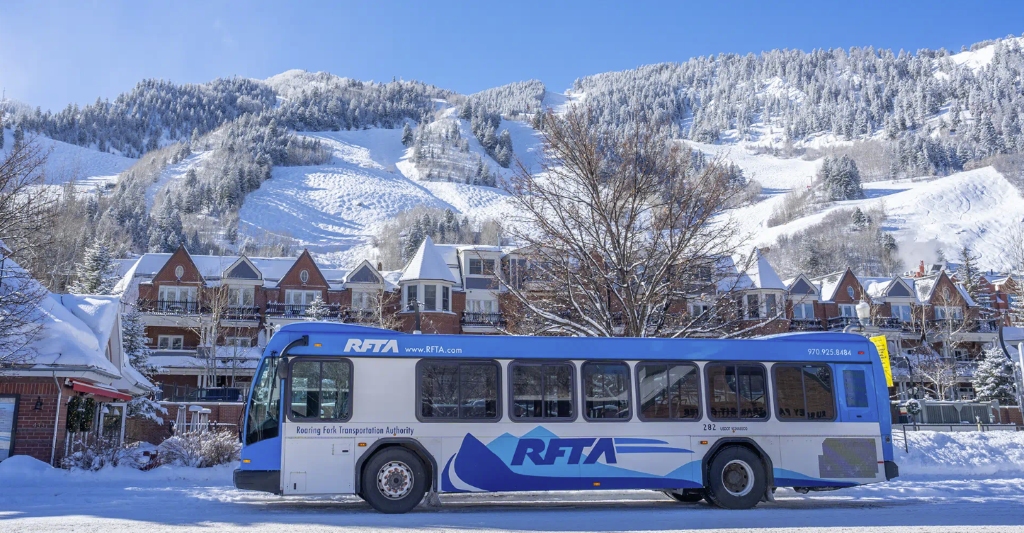
2. Skip the Rental Car and Ride the Bus
Rental cars with all-wheel drive, gas prices in mountain towns, and navigating parking lots (and parking lot fees) can add up. Try to track down locations where you can cut costs (and maybe even save some stress) by taking free mountain shuttles or public transit. It’s also helps save parking at the areas, and cut down on your carbon impact while traveling. Win-win.
- Colorado: Airport shuttle services run from Denver to Summit County, Vail, and Breckenridge, and Colorado’s state-run Bustang bus service connects Denver with mountain towns along the I-70 corridor.
- Utah: The UTA ski bus runs up the Cottonwood Canyons from the Salt Lake Valley, and it’s a bargain compared to driving yourself, especially on snowy days when canyon traffic and parking get ugly.
- Banff and Lake Louise: Airport shuttles run from Calgary, and local transit connects the town of Banff with nearby ski areas.
- In-town: Plenty of resort towns have free local shuttles, so once you’ve landed, you may not need wheels at all.
Taking the bus also means you’re not white-knuckling a mountain pass in a storm, which is a nice bonus.
3. Stay in the Next Town Over
We all want to ski-in and ski-out, but paying for it isn’t always pretty. The easiest way to cut your lodging bill is to stay 15 to 45 minutes away and commute in, whether that’s with a shuttle or your own wheels.
In Colorado, Aspen and Crested Butte have robust communities just downvalley of their resorts. Staying in Glenwood Springs, Carbondale or Basalt offers a range of shoestring budget options all the way up to luxury (just not Aspen town luxury). You also get the perk of several park-n-rides and bus options, so there’s a myriad of parking and transit options.
To ski CB, look at some lodging options in Gunnison. Lake Louise and Banff have a wealth of cheaper condo options in Canmore, which developed tons of housing options to prep for the Olympics. And while the Wasatch isn’t known for the glitz and glam, staying in Salt Lake has some of the cheapest lodging I’ve ever booked.
The key is making sure there’s a reliable bus or a short drive between your base and the mountain. A little commute time is a small price for hundreds of dollars saved over a week.
Also consider a group rental. Splitting a condo or house between four to eight people usually beats booking individual hotel rooms by a wide margin, and you get a kitchen, which brings us to…
4. Cook your own meals
Resort food is famously expensive. A slopeside lunch for a family can cost as much as a lift ticket. Book a place with a kitchen, stop at a grocery store on the way in, and make breakfast and dinner at home. Pack lunch in a backpack, or at least save the resort cafeteria for a treat day instead of every day. Plus, what’s better than your favorite snacks on the hill!
Some of our staffers’ favorite ski trip memories come from the big family-style dinners back at the condo after a big day of skiing. Everyone taking turns prepping, slicing, frying, and cleaning is good old-fashioned bonding time.
5. Adventurous? Consider camping!
While most ski areas are going to be quite cold in the winter, some are in more temperate environments that even mere mortals can handle, especially in the spring. More southerly areas like Taos and Crested Butte can have some camping areas in adjacent public lands nearby. Spring corn harvest, then camping and sharing stories around a campfire? Sounds like a ski trip for the memories.
Be sure to bring extra dry clothes to change into each day and to have separate for camping to stay dry (and ultimately, warmer) for each day and night.
6. Travel Off-Peak (if you can)
Holiday weeks and school breaks are the most expensive times of the year. If your schedule allows, aim for early season, January after the holidays, or late-season spring skiing. Flights, lodging, and tickets are all typically cheaper, and lift lines are shorter.
Insider tip: Colorado often gets plenty of late-season storms in the spring that can be total unexpected powder days in April, minus the winter and spring break crowds (but we didn’t tell you that).