With busier slopes, looming climate change, and more expensive gear, skiing ain’t easy these days.
We hear the stories from our parents and old-timers (or youngsters who feel like old-timers) throughout the lift lines: “back in my day, you wouldn’t find a soul skiing here on the weekends!” or “with everyone out here, the powder gets skied off in an hour”, or in November, “the mountains are just a little different now than they used to be.” These agitations are valid, no doubt. There are more skiers on the hill and our snowpack is more unpredictable than ever.

Skiing ain’t easy. Everyone feels the pinch of rising prices in every part of the ski industry. Pass prices soar into the rent check category and new gear is more expensive than ever. Mountain town inflation makes the ski bum lifestyle a bit more stressful. It makes it difficult to get excited about getting out to play in the mountains, especially when these activities are supposed to help us chill out.
So, what’s a skier to do? Hang the sticks out to dry? No way. The sport is different from romanticized glory days of the 80s and 90s, but that doesn’t mean we can’t still have a good time.
Dealing with traffic
When you’ve spent a long day on the hill in the cold, the last thing you’ll want to do is sit in your car at a stand-still for hours. I refuse to admit the Front Range is the only region with gnarly ski traffic. Plenty of other areas in the country are dealing with traffic issues (see Little Cottonwood Canyon) — the Front Range just happens to have some special sauce to make our traffic uniquely tied up. And a popular Instagram account to bring more attention to it all.
With a wicked combination of a huge local population that wants to ski as much as possible and have more flexible work schedules than ever before, tourist traffic all around the I-70 corridor, and bad weather on an alpine interstate, our traffic hits a little different. I think it’s fair to say we’ve all heard more complaints about traffic from skiers around here than ever before.
The reality is: more people are enjoying the sport and getting up to the mountains. Is it a little frustrating? Sure. But just as they’re adding to the traffic and longer lift lines, so are you. It only makes sense that more people want to do it, all the time.

So, what’s the solution? The only real solution is major alternative transit systems. The Salt Lake City ski community is dealing with this right now with a proposed gondola system. There are pros and cons with that specific project, but the point is this: The conversation has started.
A massive gondola running alongside the I-70 corridor sounds impressive, but is also certainly impossible. Colorado has stepped up by rapidly expanding their Bustang/Snowstang bus lines in recent years. There are some conveniences of driving in your own car, but just remember it’s an option (and frees you up to consume boozy beverages on your après ride down).
If you are driving and there’s a significant back-up, if you can, just get off the highway. Stop at a local brewery or restaurant and take a load off. It also keeps things easier on transit departments by not backing up the road so badly.
Managing rising prices
We’ve seen it happen across the board, from our grocery stores to favorite burrito shops: prices are going up. It’s not a new story this year, but one that the ski industry is feeling across the board. Season pass prices went up for many multi-mountain passes. Day tickets sound like hotel room prices. While pass prices always seem to steadily tick up, a wide spread of new gear also jumped over the last year. This makes that initial upfront cost of skiing so much steeper and more exclusive than it ever has been.
If you’re shopping for gear and looking for a deal, a great option is tracking down some past-season models that are still new. While they don’t have New Graphic Technology 3.0, they still have a lot of the latest trends and materials that get the job done. Used demos (ahem) are also a great resource.
Beginner skiers and seasoned experts alike usually push back upgrading their ski clothing too. Of course, when presented with an option of new skis or a new ski jacket, the more glamorous option usually is the skis. But transitioning from that 30-year-old worn-out parka to warm, waterproof, and breathable ski gear truly levels up your skiing.
This is another category where you can shop previous seasons for bigger discounts. If you’re shopping used, check out mountain town thrift shops and gear exchanges. They always have sneaky good finds for higher end ski jackets and pants that have been lightly used. The Boulder Gear Recycler and Aspen Thrift Shop are responsible for upgrading my very first ski kit.
Handling a dreary snowpack
This one…there isn’t a great answer. Generally lower (and at least more unpredictable) snow packs due to climate change have become a hot topic. Thanks to Triple Dip La Nina, we’re having a stellar start to our winter in a lot of places (aside from some very cold days), but the last few seasons didn’t feel like that in November.
Some of the things we can do as skiers to lower our footprints we talked about above. Things like carpooling, taking public transit, buying used, are all actionable steps you can take in reducing your personal footprint. You could also focus your skiing goals on higher elevations, which are more resistant to the effects of climate change, at least in the near-ish term.
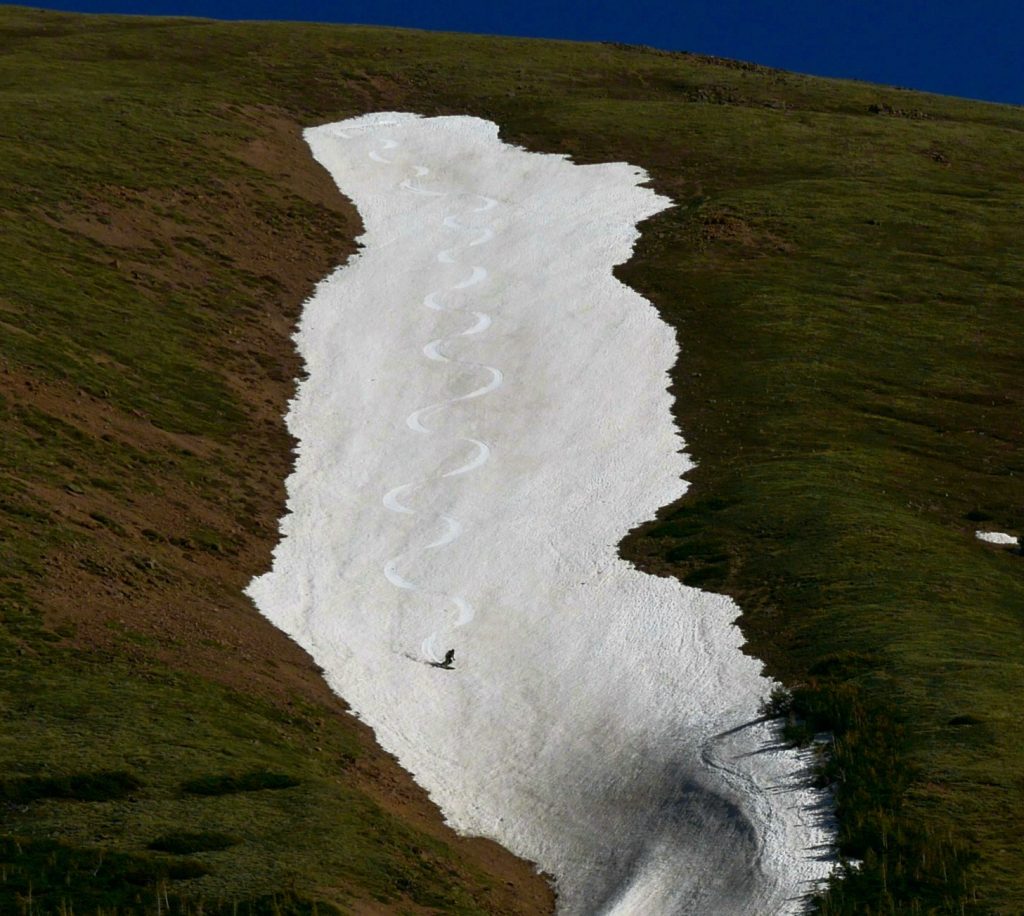
But let’s step aside from the climate doom and gloom a little. How do we ski more with less snow? Maybe instead of starting your season at a later and later date then ending at the same time, make your season longer. After lifts stop turning, hike. You can get plenty of turns in throughout the early summer months with a little effort. Check out a resort’s policy on uphill-ing after the season’s over. Always be sure to have avalanche and backcountry knowledge when going out (the problems don’t stop once the snowpack consolidates), but spring turns are a great way to find a new way to enjoy skiing. Not to mention, the spring and summer corn harvest can provide some of the best skiing of the year.
A lot of these issues are complex and don’t have a simple solution. So maybe the most actionable, quick solution is simply to just tweak our perspective. Indeed, it is merry to jest on social media accounts about long lift lines at certain resorts-that-won’t-be-named, complain about traffic, and wish for times gone by. But the reality is the world we have right now. So instead of finding problems with the system, let’s find creative ways to enjoy this thing we love to do so much.
Feeling inspired to take a low budget ski vacation? Check out some of the most affordable places to ski in Colorodo.