Editor’s note: The QST 106 comes back unchanged for 2026-2027, except for a graphics update. The “almond milk” color returns, and a black/pink color replaces the purple “nirvana” color.
It’s a QST thing.
Since they introduced the QST 106, Salomon has enjoyed re-introducing the ski with fresh updates every couple years. For 2025-2026, they redesigned the full QST collection, giving each ski a more distinct personality. The 94 goes more directional. The 100 goes more playful. What does that mean for the 106?
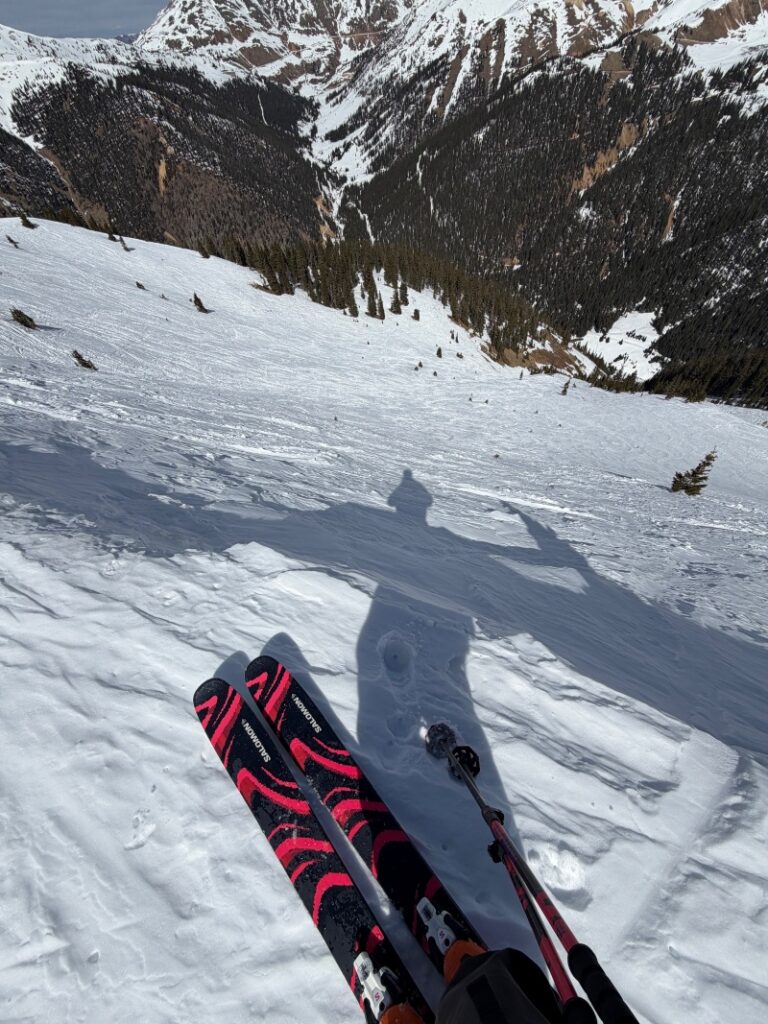
Salomon QST 106 Review: Field Notes
First impressions matter less in skiing than, say, dating. But I thought two things the first time I saw the new QST 106. One: I don’t know about those graphics. Two: The updates sound like they make sense.
It turns out my first reaction to the graphics didn’t stick; they have grown on me and look exponentially better on snow than on an iPhone screen. And it’s what’s inside that really counts, right? So here are the updates Salomon made to the new QST 106:
Construction. Salomon ditched C/FX laminate and embedded basalt into the fiberglass, a layer that sits atop a full poplar wood core. The basalt is supposed to dampen vibrations and add some liveliness, and we’ve seen that check out with skis from other brands. A bigger deal: New cork inserts in the tips and tails, which extend further toward the body of the ski than you might think. Salomon hopes these laminates will improve the QST 106’s smoothness in mixed conditions.
Profile. The new QST 106 features more tail splay and longer rocker—and also a little more camber. Salomon adjusted the taper, too, which slightly lengthened the skis’ radius (19.5m instead of 19m). Notably, the 106 has held strong with a longer radius than the other QSTs (more of a big-mountain profile), and that continues in the new version.
Flex. It’s worth mentioning (spoiler) that the tails of the new QST 106 flex stiffer than the previous versions. This was an athlete-driven update, intended to make them more stout for big-mountain skiing and landing drops.
Sizes: 157, 165, 173, 181, 189 // Dimensions: 140-106-129mm // Recommended Mount: -9.1cm
Tester: I skied the 181cm size. As a human, I spec out at 5’7″ and 170 lbs (those IPAs have stacked up).
So…how’d they go?
Groomers
Past versions of the QST 106 have typically done a better-than-average job of skiing groomers for a mid-fat ski. Not the chargiest but plenty reliable on edge down firm runs.
The newest edition follows suit. If anything, it levels up. Despite the loss of the double sidewall, these skis still feel solid underfoot, with plenty of power and torsional rigidity to handle high-speed carves. The stiffer tails, which are also more squared-off than in past versions, feel relatively locked-in compared to other models with this much rocker and splay. They will skid and smear if you want them to, but they won’t give out if you don’t want them to.
Compared to the previous QST 106, these skis still, obviously, angle toward freeride. So if you love carving directional sticks, you’re still going to prefer metal-laminate skis like the Blizzard Anomaly 102, Nordica Enforcer 104, and Volkl Katana 108. This will unlikely be a dealbreaker unless you prioritize firm-snow groomer performance in your mid-fat skis (which I do not).
And that said, these QST 106s outpace most of the competition for mid-fat non-metal skis. They’re much more energetic carvers than the previous version. If you give them enough juice, they return plenty of rebound and smooth turn linking.
Trees and Bumps
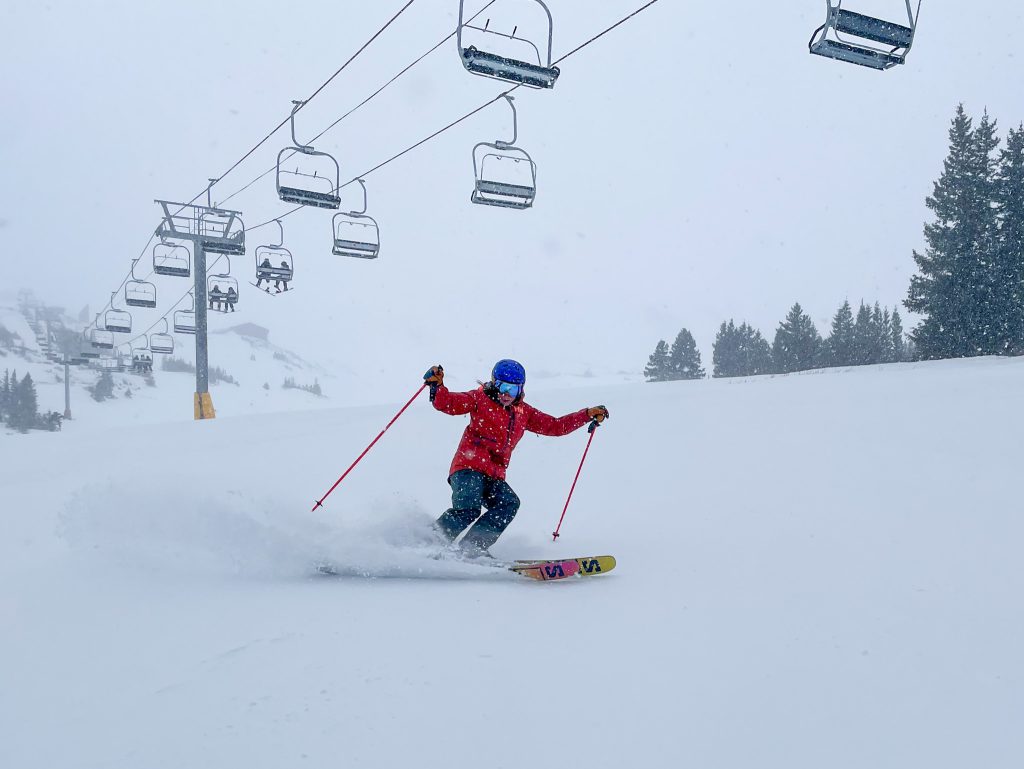
In our last two reviews of the previous QST 106s, I wrote that the skis “absolutely shine off-piste.” Well, I need to triple-down on that comment for the 2026 version. Does that mean I should write absolutely-ly-ly? (Editor’s note: adverbs are gross).
The liveliness I mentioned above also shows up when you’re skiing bumps or hunting airs. These QSTs bring significantly more pop and energy to the table versus the previous version, so they’re more apt to double moguls and throw spread eagles at the bottom. Again, I don’t notice any lack of stability underfoot, despite the loss of those double sidewalls. These skis stay planted to a mogul line, and are just as happy to zipper bumps as they are to navigate them with a more finessed approach.
The caveat there is this: The stiffer tails and new profile make the skis a little more demanding than any QST 106 I’ve skied. They’re not hard to ski, but you need to give them more input to make them perform how you want. That might be confusing, considering the extra rocker and tail splay. Yes, those updates help give these skis extra playfulness and freeride character. But if you just expect to cruise around, standing on these skis and sliding your turns, you’re not going to access those characteristics. Rather, the new QST 106 could feel less forgiving in bumps and tree alleys than you’d hoped.
For that reason, I’d pause before putting intermediate skiers on the QST 106. If you’re athletic, advancing quickly, and want to ski hard more often, go for it. But if you want a ski that will feel light and no-drama when you’re cruising around, or one with easy pop and jib, you’ll get along better with some other options. The QST 106 is much more “big-mountain” than “all-mountain freestyle”.
Powder and Mixed Snow
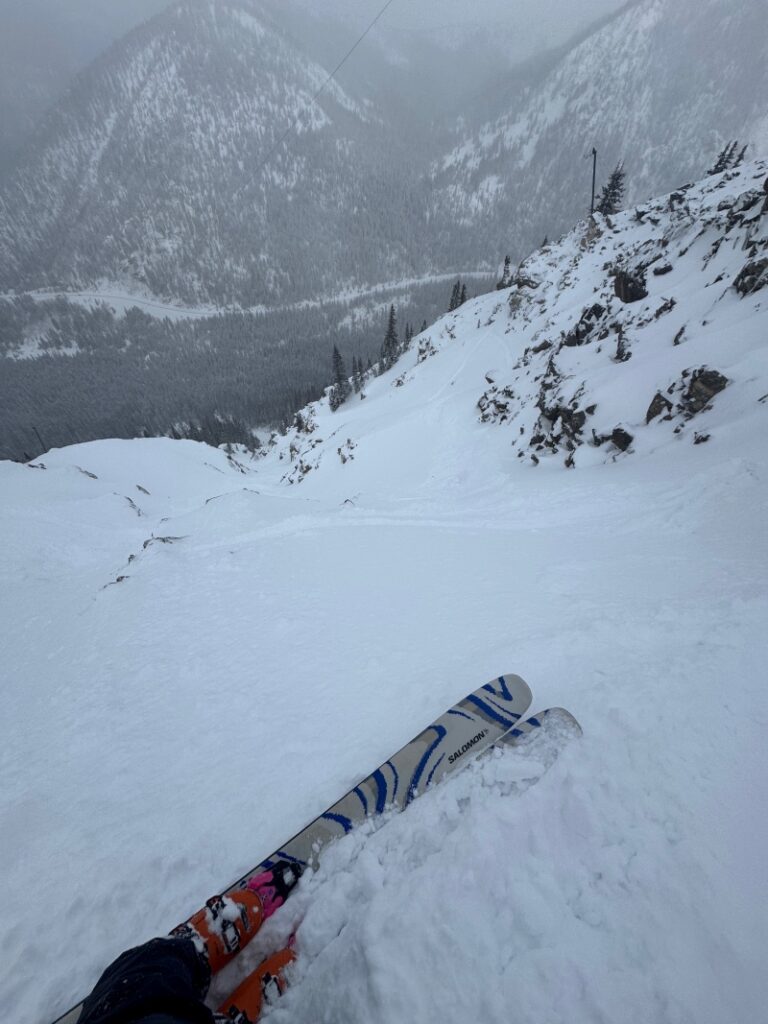
Still here? Well, then the QST 106 will probably check all your boxes and then some. I noticed the biggest differences between this version and the last one in powder and mixed snow on big-mountain terrain.
First: The shape updates give the new 106 quite a bit more float. I’m low-key always looking for mid-fat skis around 105mm-109mm that float like a wider ski. It’s one reason I loved the 108mm version of the Black Crows Atris. You could have convinced me that thing measured 120mm underfoot with how well it motorboated (Weird verb to use? I’m sticking with it). While I might not go that far with this ski, it’s the first QST 106 that I’ve thought of as legitimately floaty. Motorboaty. Ok, I’ll stop.
Whether the snow is powdered sugar or mashed potatoes, these QSTs want to stay on top. While all of those metal laminate skis I mentioned above feel like they want to sink, the QST 106 wants to savor. So you get more playful character and more flotation, along with stout tails and a mid-long radius. To me, that’s kind of an ideal recipe for a big-mountain ski. Enough grr to attack the fall line and rail long arcs, yet the right rocker, taper, and splay to deviate from your line and hit a drop or slash a wind drift.
In mixed snow (firm chop, soft chop, heavy stuff, wind buff, etc) the QST 106 feels intuitive and smooth at slow and medium speeds (if, again, you’re living in the fronts of your boots and driving it). Particularly at high speeds in those less-than-ideal snow conditions, I noticed the extended cork inserts in the tips and tails. They do some serious lifting when it comes to quieting the ride and keeping things smooth and simpatico. That matters in consequential, pucker-worthy terrain where you need the right blend of predictability, stability, and maneuverability to avoid a bad time. Sorry for the adjective salad.
One note on the character of this model. With that 19.5-meter radius and those stiffer tails, I still think I’d categorize these QSTs as more directional than playful. The real answer is that, in my opinion, they’re one of the most well-balanced mid-fat skis on the market. Ie, they can be your everything if they match your ski style. But they would rather haul than jib (see the non-progressive mount point). They’d rather devour the cupcake in one bite than nibble. If that makes any sense whatsoever.
Downside
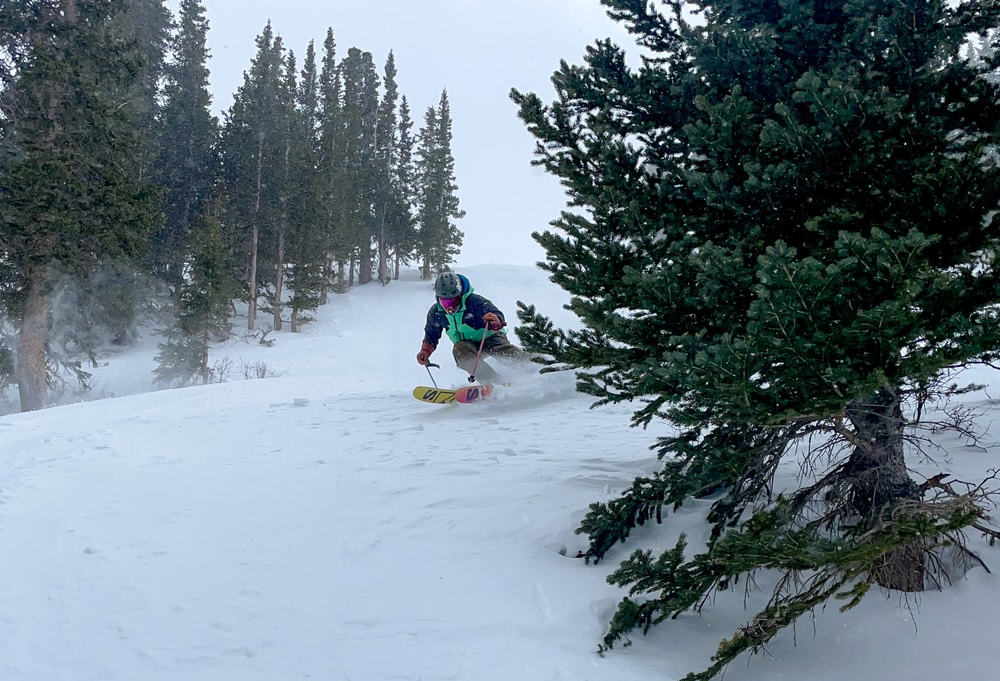
The newest QST 106 has undoubtedly closed the gap between the QST collection and bonafide chargers, like the ones I mentioned earlier. It’s probably not a gap that needs to get any tighter, to be honest. Still, technical skiers who want technical skis will still prefer to look elsewhere. See: flatter tails and metal laminates.
With the extra big-mountain chops, I also think the QST 106 is no longer an everyman’s mid-fat ski, like some previous versions were. So many models exist in this category that less aggressive, mellower skiers can find the perfect ski for them without needing to get on something that will require a certain level of input to access its best performance.
Bottom Line
The 2025-2026 QST 106 retains the character of its predecessors, but it doubles down on the traits that make aggressive powder-hunters the happiest. More stability. More playfulness. More zhuzh. If that describes what you’re looking for, you’ve found your new daily driver in the mid-fat category.
Not that anyone asked, but to me this is the best QST 106 yet. As someone who loves to attack the fall line but sometimes frenetically deviates when he sees a fresh stash or inviting lip, I feel like this ski gets me. I’ve never raced, and I’m a few light years away from “steezy.” But I like skiing fast and pretending I’m good at airs. So the new shape, cork inserts, and stiffer tails add up to a near-perfect recipe for my style and preferences. Chef’s kiss.