By Amy David
We all need checklists.
When you’re packing backcountry skiing gear, you don’t want to forget essential items. It goes without saying that a long night in the woods gets even longer without, say, a puffy or a headlamp or some snacks or an emergency blanket.
But even before you start prepping, you want to make sure you’ve got the right stuff on your packing list. So, we asked Powder7 skier Amy David to show us what she brings into the backcountry.
From Amy:
Whether you’re extending your ski season deep into the spring/summer or plotting to level up your game for next season, some gear advice always helps! With record snowfall across North America, the mountains remain blanketed in white, and skiers are still flocking to the backcountry. Spring is primetime for corn skiing—the perfect melt-freeze sweet spot for satisfying turns.
Whether you’re going out to ski corn laps, summit a peak, or ski a steep couloir, there are essential items to carry with you in the backcountry. This gear can be considered in several categories including avalanche safety, navigation, survival, first-aid, repair kit, and ski gear.
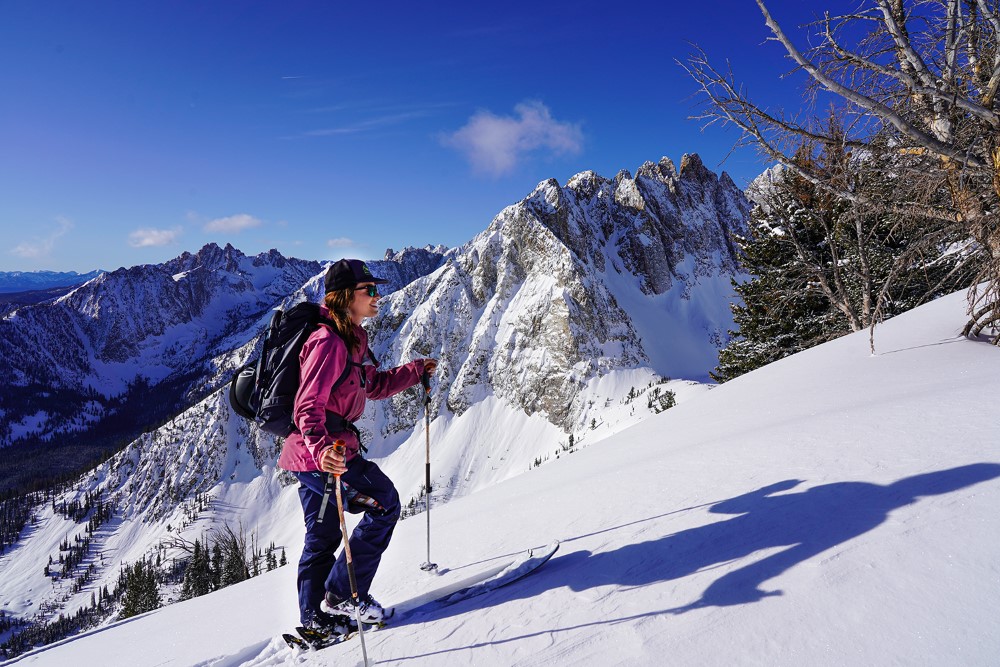
The way you organize your gear in your pack can make life easier or harder while moving through the mountains. When packing my bag for a day in the backcountry, I consider the ABC’s. A is for accessibility—I pack items I’ll use throughout the day in the outside pockets and top of the large compartments. Items I hope I won’t need as readily accessible go deeper in the pack, like first-aid kit and tarp. B is for balanced—put the heaviest items in the center of the pack and evenly distribute the weight from side to side. C is for compact—once everything is in your pack, tighten the straps and make sure nothing is dangling off the outside of your bag.
Most importantly, you and your backcountry partners should be trained and practiced with every tool you’re carrying out in the mountains. To learn more about avalanche safety, visit avalanche.org.

Backcountry Ski Gear List
What’s in Amy’s Pack
Avalanche Safety:
- Avalanche transceiver
- Metal avalanche shovel
- Avalanche probe
- Snow saw and snow study kit (optional)
Navigation:
- Phone with maps downloaded for GPS use
- Power block and charging cable for phone
Survival:
- Headlamp
- Two-way radio
- Satellite communication device
- First-aid kit (recommended to take a Wilderness First Responder course)
- Lightweight tarp and cord (or a rescue sled)
- Extra down puffy jacket
- Fire starter kit
- Extra handwarmers
Repair Kit:
- Knife
- Multitool
- Ski scapers
- Duct tape
- Several voile ski straps
- Rub on skin wax and ski wax
Self-Care:
- Water
- Hot beverage
- Hearty food for lunch
- Snacks with substance
- Quick energy snacks like gu, blocks, candy, snickers!
- Sunscreen
- Lip balm
- Sunglasses
Appropriate Layers:
- Light gloves for skin track
- Warm gloves
- Warm hat
- Sun hat
- Neck buff
- Light baselayers
- Down jacket insulative layer
- Outer shell jacket and pants
- Ski socks
Ski Gear:
- Goggles with extra lenses (both low light and full sun)
- Skins
- Skis
- Bindings
- Poles
- Boots
- Helmet
- Ski crampons for firm touring conditions